Introduction
Foguang Temple lies beyond the Southern Terrace of Mount Wutai, some forty li to the terrace’s southwest. Its name comes from an auspicious response: the Qingliangshan Zhi says that “Emperor Wen of Wei beheld the auspicious sign of Buddha’s light, and so named it.” This “Buddha’s light” was no empty conceit. In the fifth year of the Dali era of the Tang (770), the monk Facao followed the light into the mountains, first “seeing from afar several beams of white light to the south of Foguang Temple,” and at night saw another beam coming down from the northern hills; the temple monks answered that “this is the inconceivable light of the Great Sage, which ever responds to those with an affinity.” In the fifteenth year of the Yuanhe era (820), Pei Du, Military Commissioner of Hedong, went so far as to report to the court that “auspicious clouds appeared beside Foguang Temple.” The name and the light were thus recorded again and again.
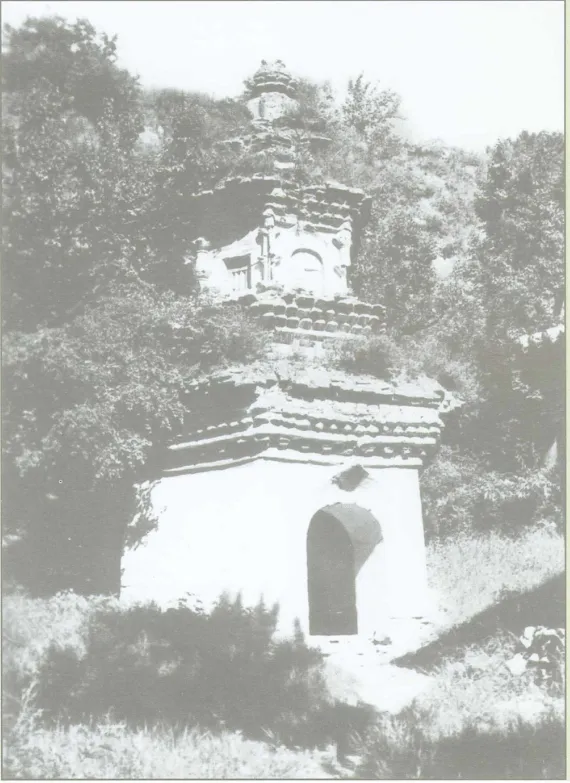
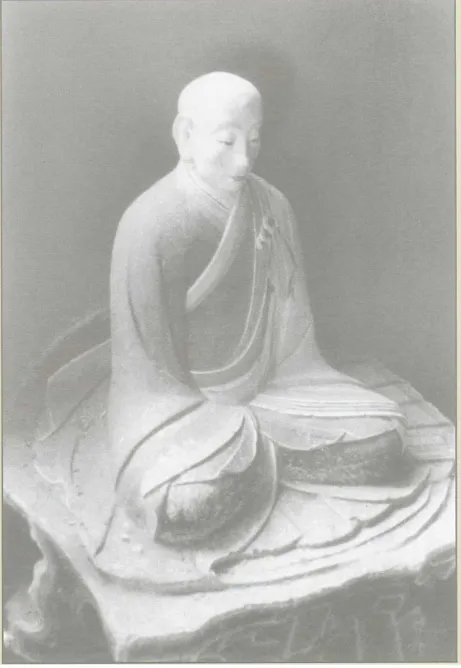
Beyond the light was the substance of a great Tang temple. The Dunhuang Record of a Journey to Mount Wutai notes its “seven-bay great Buddha hall” and its “three-story, seven-bay Maitreya pavilion,” together with the true-body pagoda of the monk Jietuo and a resident cloister that fed more than five hundred monks daily; the Song Gaoseng Zhuan says that the monk Faxing here “built a three-story, seven-bay great Maitreya pavilion, ninety-five chi high,” which corroborates exactly what the travel record saw. During the Huichang persecution most of these halls and pavilions were toppled and destroyed, and only a single founder’s pagoda survived. The one who later rebuilt it was the monk Yuancheng. The Song Gaoseng Zhuan records that during the Dazhong era he “sought out Foguang Temple anew,” finding the temple “already fallen into ruin,” and so “set his heart on renewing it step by step.” The East Hall, the most important structure in the temple today, is exactly what this reconstruction left behind.
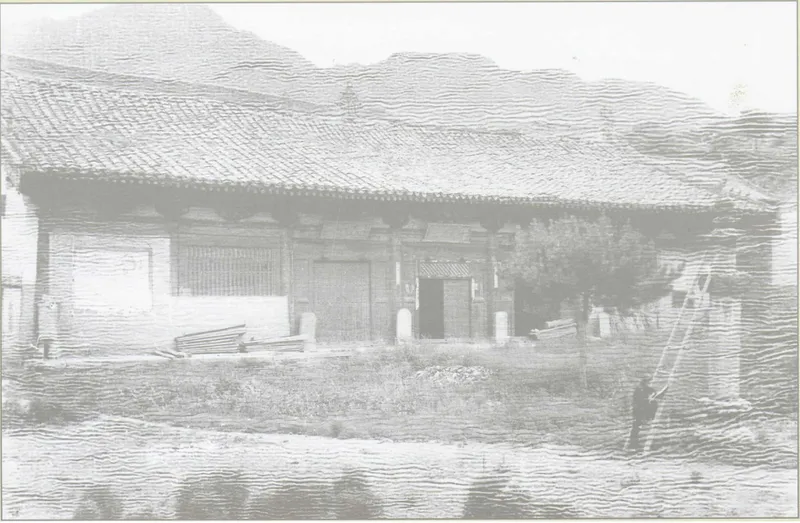
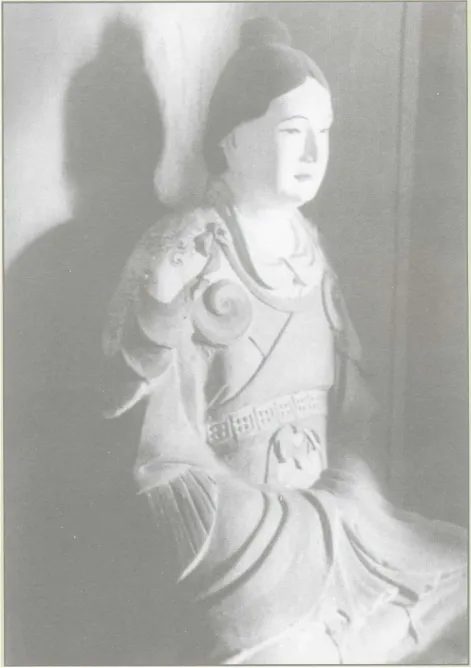
In June 1937, Liang Sicheng, Lin Huiyin, Liu Dunzhen, and Mo Zongjiang surveyed and measured Foguang Temple; according to Liang Sicheng’s Ji Wutaishan Foguangsi Jianzhu (A Record of the Architecture of Foguang Temple on Mount Wutai), they relied on the inscription beneath the East Hall’s beam naming “the patron of the Buddha hall, the female disciple from the capital, Ning Gongyu,” and corroborated it against the wording on the sutra pillar before the hall, to determine that the great hall was built in the eleventh year of the Dazhong era of the Tang (857) — precisely matching the date of Yuancheng’s reconstruction.
Historical Documents
Record of a Journey to Mount Wutai
又到佛光寺,四十里宿。廿七日,夜见圣灯,一十八遍现。兼有大佛殿七间,中间三尊两面文殊普贤菩萨。弥勒阁三层七间,七十二贤、万菩萨、十六罗汉、解脱和尚真身塔、锁子骨和尚塔〔四〕,云
I also came to Foguang Temple, lodging after forty li. On the twenty-seventh, at night I saw the holy lamps, which appeared eighteen times. There is also a seven-bay great Buddha hall, with three images in the center and, on either side, the bodhisattvas Manjushri and Samantabhadra. The Maitreya pavilion is three stories and seven bays, with the seventy-two worthies, the myriad bodhisattvas, the sixteen arhats, the true-body pagoda of the monk Jietuo, and the pagoda of the “chain-bone” monk, said to be
是文殊、普贤化现。常住院,大楼五间,上层是经藏,于下安众,日供僧五百余人。房廊殿宇更有数院,功德佛事极多,难可具载。
manifestations of Manjushri and Samantabhadra. In the resident cloister there is a five-bay great building, whose upper story holds the sutra repository and whose lower level houses the assembly, providing daily for more than five hundred monks. The chambers, corridors, and halls form several more courtyards, and the meritorious Buddhist works are so numerous that they can scarcely be fully recorded.
Song Gaoseng Zhuan
释法兴,洛京人也。七岁出家,不参流俗。执巾提盥,罔惮勤苦。讽念法华,年周部帙。又诵净名经,匪逾九旬。戒律轨仪,有持无犯。来寻圣迹,乐止林泉,隶名佛光寺。节操孤颖,所沾利物,身不王持。付属门人,即修功德,建三层七间弥勒大阁,高九十五尺。尊像七十二位圣贤、八大龙王,罄从严饰。台山海众异舌同辞,请充山门都焉。盖从其统摄,规范准绳,和畅无争故也。大和二年春正月,闻空有声云:“入灭时至,兜率天众今来迎导。”于是洗浴焚香,端坐入灭。建塔于寺西北一里所。
The monk Faxing was a man of Luoyang. He left home at the age of seven and never mingled with the common crowd. Holding the towel and basin, he did not shrink from toil and hardship. He chanted the Lotus Sutra, completing the whole text within a year, and recited the Vimalakirti Sutra in no more than ninety days. In the precepts and ritual observances he upheld all and transgressed none. Coming to seek out sacred traces, he delighted in dwelling amid forests and springs, and enrolled his name at Foguang Temple. His integrity was solitary and outstanding; whatever benefit he received he did not keep for himself. Entrusting the work to his disciples, he then performed meritorious deeds, building a three-story, seven-bay great Maitreya pavilion, ninety-five chi high. Its venerable images of the seventy-two sages and worthies and the eight great dragon kings were all richly adorned. The assembled multitudes of Mount Wutai, with different tongues but one voice, asked him to serve as the temple’s overseer, for under his governance the rules and standards were harmonious and without dispute. In the first month of spring in the second year of the Taihe era (828), he heard a voice from the void saying, “The time of your passing has come; the host of Tushita Heaven now comes to welcome and guide you.” Thereupon he bathed and burned incense, sat upright, and passed into extinction. A pagoda was built for him about one li to the northwest of the temple.
释愿诚,姓宋氏。望本西河,家袭素风,浚流远派,不扬胄绪,祖考不书。母阴氏夜梦庭树对发千花,余花寻谢,独结一果。乃觉有孕。母启愿心,得娠男子足矣。十月临蓐,果如其望,立字曰愿诚。后志存小字,不训法名者,遵慈母之意也。诚少慕空门,虽为官学生,已有息尘之志。迨栖金地,礼行严为师。严即儒宗珪璋,释氏师子也。一旦谓诚曰:“汝神情朗秀,宜于山中,精勤效节,可不务乎!”大和三年落发,五年具戒。先诵诸经,悉皆精练,行人属耳,道望日隆。无何,会昌中随例停留,唯诚志不动摇。及大中再崇释氏,选定僧员,诚独为首矣。遂乃重寻佛光寺。已从荒顿,发心次第新成。美声洋洋,闻于帝听,飙驰圣旨,云降紫衣。后李氏奄有并门,遐奉文殊,躬游圣地。睹其令范,抚手惬怀,表闻唐天子相继,乃赐大师号圆相也,就加山门都检校。光启三载,羞馔命僧舍衣投施。钟声引众,悉至斋堂,右胁曲肱,寂然长往。建塔树碑寺之西北一里也。
The monk Yuancheng was of the Song family. His clan’s seat was originally in Xihe; his household inherited a plain and simple way of life, its lineage flowing from a distant source, but its pedigree was not paraded and his forebears were not recorded. His mother, of the Yin family, dreamed one night of a courtyard tree bursting forth with a thousand blossoms; the other flowers soon withered, and only a single fruit set. She then realized she was with child. The mother had made a vow, wishing only to bear a son. When after ten months she came to give birth, it was indeed as she had hoped, and she gave him the name Yuancheng (“fulfilled vow”). That he later kept this childhood name rather than being called by a Dharma name was in deference to his loving mother’s wish. In his youth Cheng admired the gate of emptiness; though a government student, he already had the intention of resting from worldly dust. When he came to dwell on the golden ground, he took Xingyan as his master through the proper rites. Xingyan was a paragon of the Confucian tradition and a lion among the Buddhists. One day he said to Cheng, “Your spirit is bright and outstanding; you are suited to the mountains. Should you not strive diligently to fulfill your calling?” In the third year of the Taihe era (829) he took the tonsure, and in the fifth year (831) received the full precepts. First he recited the various sutras, all with thorough mastery, and as travelers gave ear to him, his reputation for the Way grew daily. Before long, during the Huichang era, he withdrew as the general order required, yet Cheng alone remained unshaken in resolve. When in the Dazhong era Buddhism was again honored and the roster of monks was selected, Cheng alone was placed at its head. He then sought out Foguang Temple anew. As it had already fallen into ruin, he set his heart on renewing it step by step. His fine reputation spread far and reached the emperor’s ear; imperial edicts sped like the wind, and the purple robe was bestowed as if from the clouds. Later, when the Li clan came to hold sway over Bingmen and revered Manjushri from afar, journeying in person to the sacred ground and beholding his admirable conduct, they clapped their hands in delight and submitted memorials that the Tang emperors in succession granted him the title of Great Master Yuanxiang, and further appointed him inspector-general of the temple. In the third year of the Guangqi era (887), he ordered fine food prepared for the monks and gave away his robes in offering. As the bell summoned the assembly, all came to the refectory; lying on his right side with his arm for a pillow, he passed silently away. A pagoda was built and a stele erected one li to the northwest of the temple.
则五年四月五日到五台县,遥见佛光寺南数道白光。六日到佛光寺,果如钵中所见,略无差脱。其夜四更,见一道光从北山下来射照。照忙入堂内,乃问众云:此何祥也?吉凶焉在?有僧答言:此大圣不思议光,常答有缘。照闻已,即具威仪,寻光至寺东北五十里间,果有山,山下有涧,涧北有一石门。见二青衣,可年八九岁,颜貌端正,立于门首,一称善财,二曰难陀。
On the fifth day of the fourth month in the fifth year, he arrived at Wutai County, and saw from afar several beams of white light to the south of Foguang Temple. On the sixth day he reached Foguang Temple, and it was indeed just as he had seen in his begging bowl, with scarcely any discrepancy. That night at the fourth watch, he saw a beam of light come down and shine from the northern hills. Facao hurried into the hall and asked the assembly, “What omen is this? Where does its fortune or misfortune lie?” A monk answered, “This is the inconceivable light of the Great Sage, which ever responds to those with an affinity.” Having heard this, Facao at once composed his bearing with due dignity and followed the light to a spot some fifty li to the temple’s northeast, where there was indeed a mountain, at whose foot ran a stream, and to the stream’s north stood a stone gate. He saw two figures in blue robes, perhaps eight or nine years old, of upright and handsome appearance, standing at the head of the gate; one was called Sudhana, the other Nanda.
Wenjian Houlu, Citing the Veritable Records of Emperor Muzong of the Tang
五台山佛光,其传旧矣。唐穆宗实录:元和十五年四月四日,河东节度使裴度奏:五台山佛光寺侧庆云现,若金仙乘狻猊,领其徒千万,自己至申乃灭。又峨眉普贤寺光景殊胜,不下五台,在唐无闻。李太白峨眉山诗言仙而不言佛,华严经以普贤菩萨为主,李长者合论言五台山而不言峨眉山。又山中诸佛祠俱无唐刻石文字,疑特盛于本朝也。
The Buddha’s light of Mount Wutai has long been transmitted. The Veritable Records of Emperor Muzong of the Tang state: on the fourth day of the fourth month in the fifteenth year of the Yuanhe era (820), Pei Du, Military Commissioner of Hedong, memorialized: beside Foguang Temple on Mount Wutai auspicious clouds appeared, as though a golden immortal riding a lion led his followers by the tens of millions, in the likeness of a golden transcendent, and it did not vanish from the hour of si until the hour of shen. The luminous scenes at the Puxian Temple of Mount Emei are also exceptionally fine, no less than at Wutai, yet went unheard of in the Tang. Li Taibai’s poem on Mount Emei speaks of immortals but not of the Buddha; the Huayan Sutra takes the bodhisattva Samantabhadra as its central figure, and Elder Li’s collected commentary speaks of Mount Wutai but not of Mount Emei. Moreover, none of the Buddhist shrines in the mountains bears carved stone inscriptions from the Tang, which suggests that it flourished especially in the present dynasty.
Cefu Yuangui, Citing Pei Du’s Memorial
穆宗以元和十五年正月即位。二月,河东节度使裴度奏:今月四日,五台山佛光寺侧庆云现,中有金人乘狻猊,领徒千万,如金仙状,自巳至申方灭。
Emperor Muzong ascended the throne in the first month of the fifteenth year of the Yuanhe era (820). In the second month, Pei Du, Military Commissioner of Hedong, memorialized: on the fourth day of this month, beside Foguang Temple on Mount Wutai auspicious clouds appeared, within which was a golden figure riding a lion, leading followers by the tens of millions in the likeness of a golden transcendent, which did not vanish until, from the hour of si to the hour of shen, it faded away.
Qingliangshan Zhi
佛光寺、台西南四十里。魏文建,帝见佛光之瑞,因为名。唐解脱和尚于此藏修。参政王陶诗:五台山上白云浮,云散台空境自幽。历代珠幡县法界,累朝金刹列峰头。风雷激烈龙池夜,草木凄凉雁塞秋。世路茫茫名利者,尘机到此尽应休。
Foguang Temple, forty li to the terrace’s southwest. It was built by Emperor Wen of Wei, who beheld the auspicious sign of Buddha’s light and so named it. In the Tang, the monk Jietuo practiced in seclusion here. A poem by the Vice Minister Wang Tao reads: Over Mount Wutai white clouds drift; when the clouds disperse and the terrace stands empty, the scene grows serene of itself. Through the ages jeweled banners have hung across the dharma realm; dynasty after dynasty golden temples have arrayed themselves along the peaks. Wind and thunder rage fierce over the dragon pool at night; grasses and trees turn desolate at the wild-goose frontier in autumn. For those who chase fame and profit on the boundless road of the world, all worldly scheming should here come to rest.
戊申,至佛光寺,主僧绍仝曰:此解脱禅师道场地,碑与龛存。因阅碑中所载解脱自解脱,文殊自文殊之语,喟然叹曰:真丈夫也。以偈赞曰:圣凡路上绝纤痕,解脱文殊各自论。东土西方无著处,佛光山下一龛存。
On the wushen day, I arrived at Foguang Temple. The presiding monk Shaotong said: this is the site of Chan Master Jietuo’s practice, and his stele and shrine-niche survive. Upon reading in the stele the words “Jietuo is of himself Jietuo, Manjushri is of himself Manjushri,” I sighed in admiration and said: truly a great man. I praised him with a gatha: On the road of sage and ordinary alike, not the faintest trace remains; Jietuo and Manjushri each stand by their own account. In the East and in the West there is no place to abide; below Foguang Mountain a single niche survives.
日已夕,见寺前庆云,紫润成蕊,问仝曰:此寺颇有灵迹否?何因何缘见此瑞气?仝曰:闻皇祐中尝有圣灯。
As the day drew toward dusk, I saw before the temple auspicious clouds, moist and purple, forming into buds, and asked Shaotong: does this temple have many numinous traces? By what cause and what condition does one see this auspicious vapor? Shaotong said: I have heard that during the Huangyou era there once appeared holy lamps.
Historical Photographs
1920s to 1930s
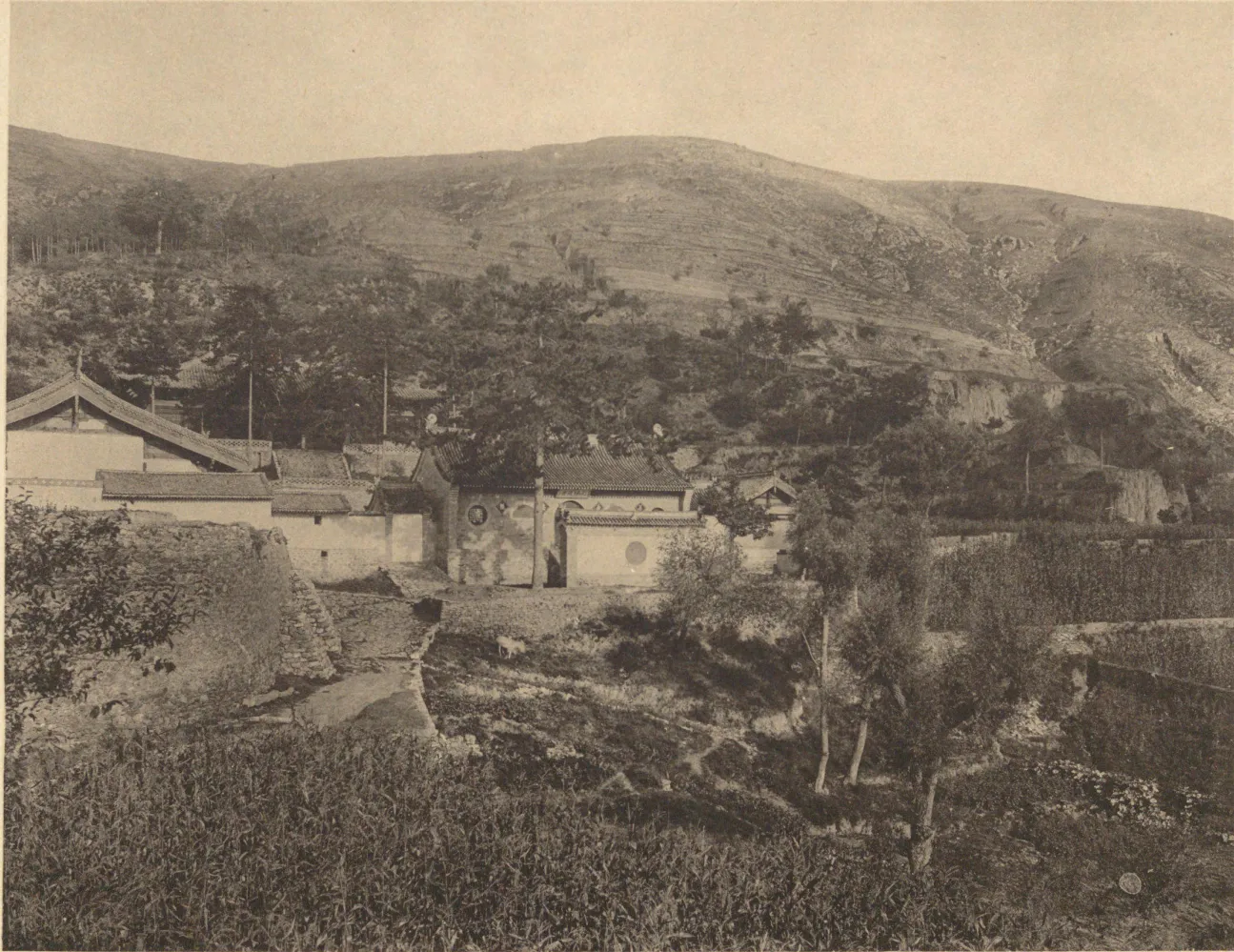
Volume I of Tokiwa Daijo and Sekino Tadashi’s Shina Bunka Shiseki, published in 1941, includes old photographs of Foguang Temple: a panorama, the three images within the hall, the central Shakyamuni Tathagata, the Amitabha Tathagata to the west, the dharani pillar before the temple, and the dharani pillar behind the hall. The images below are all cropped to the photograph boundaries from the pages of the original album, without retaining margins, captions, or neighboring photographs.
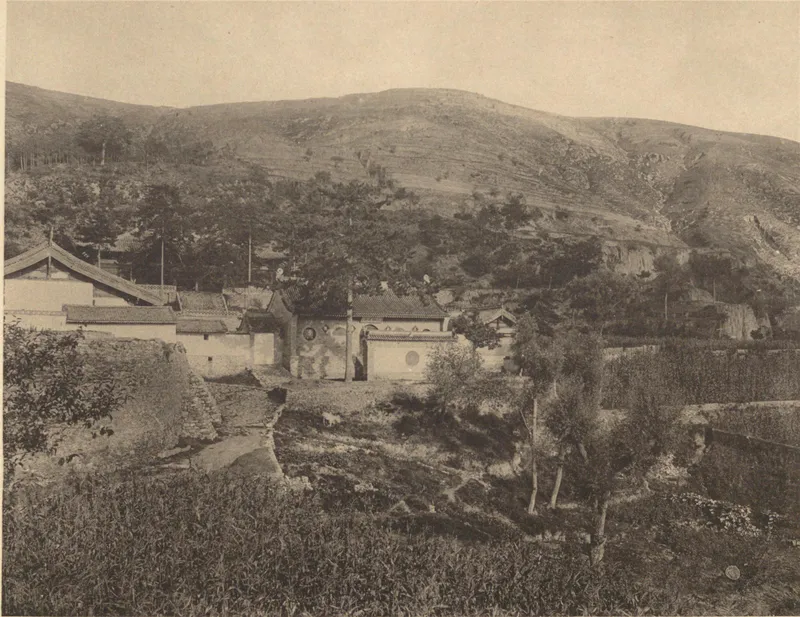
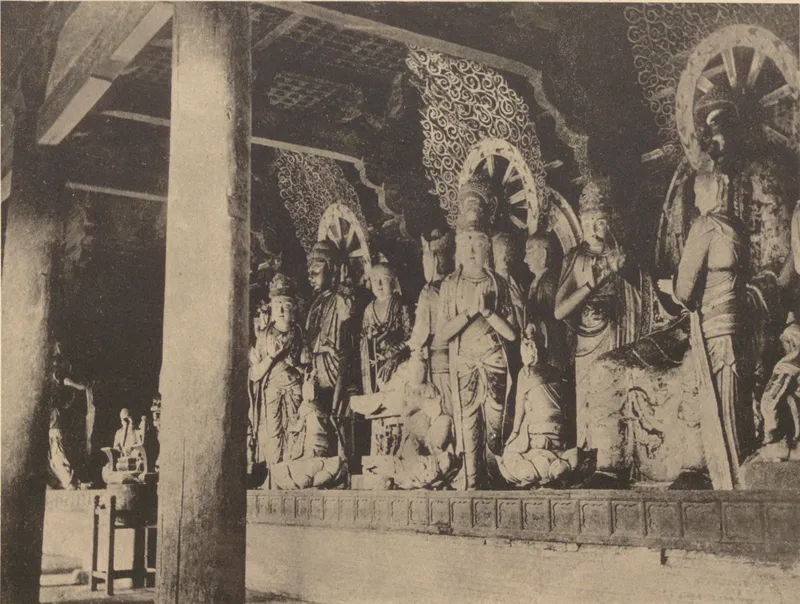
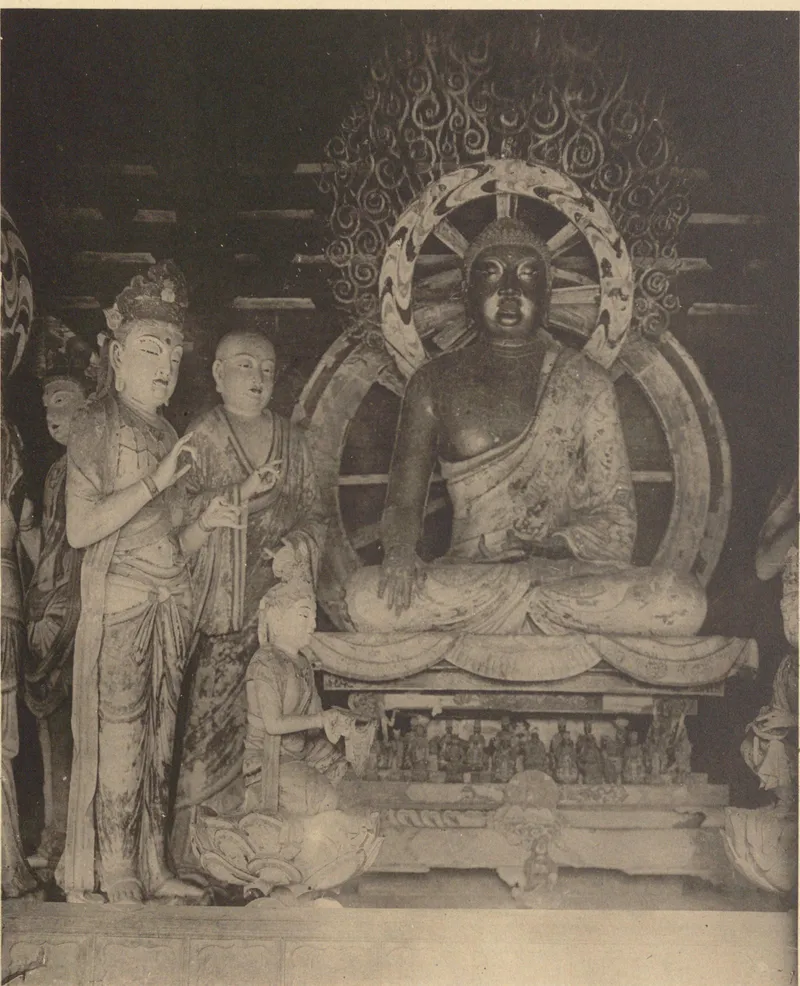
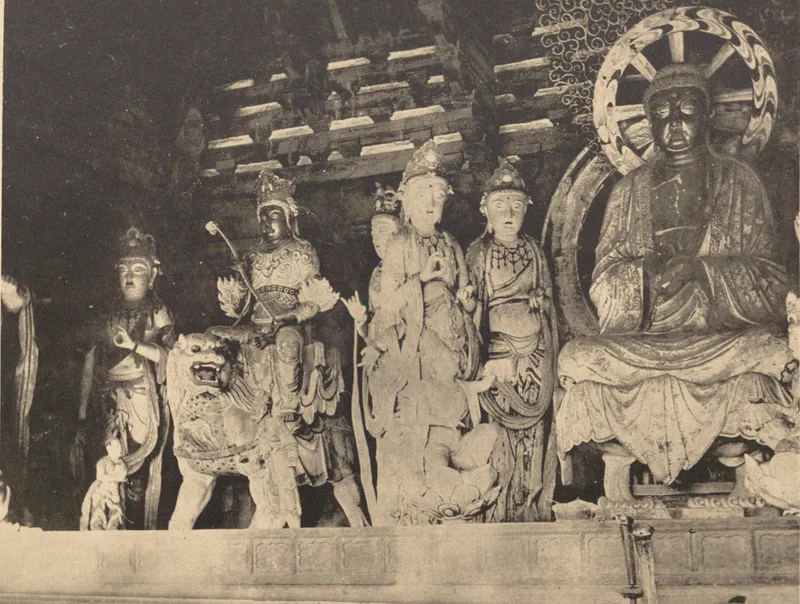
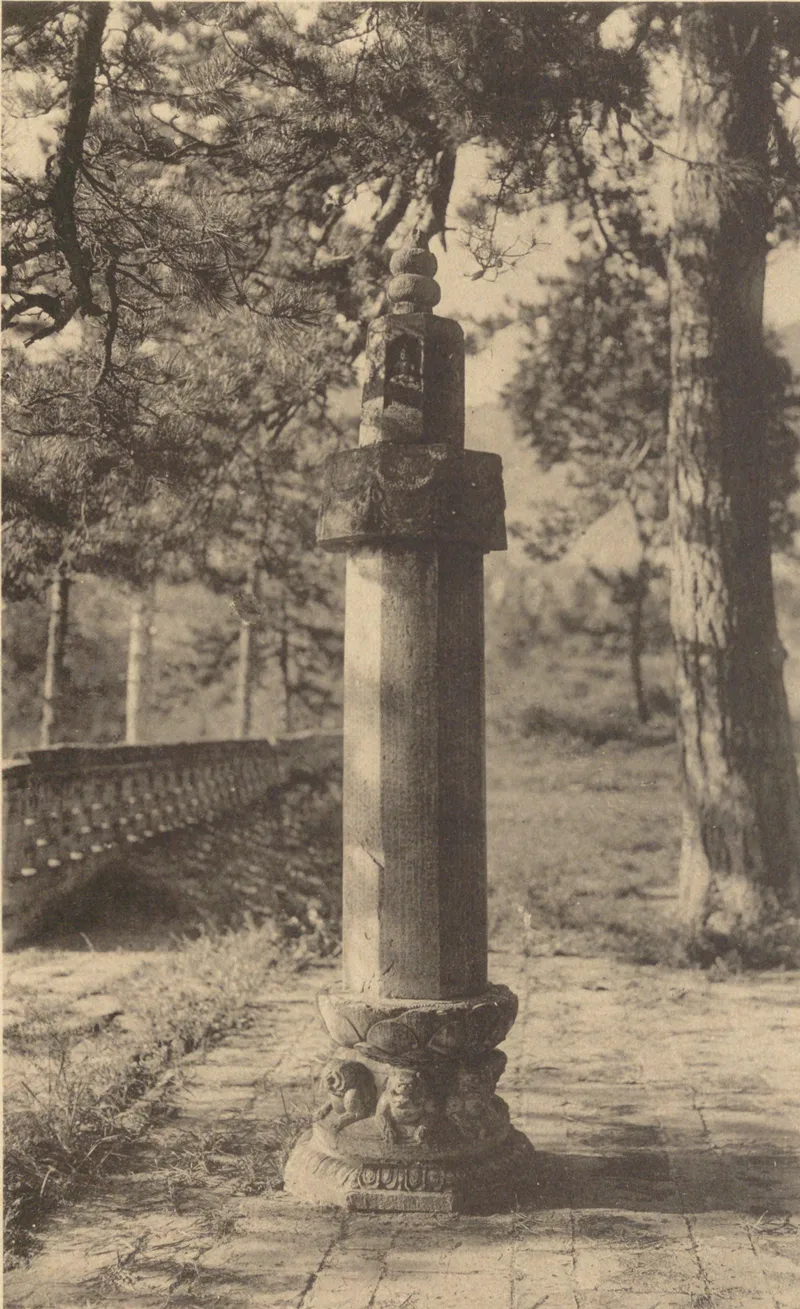
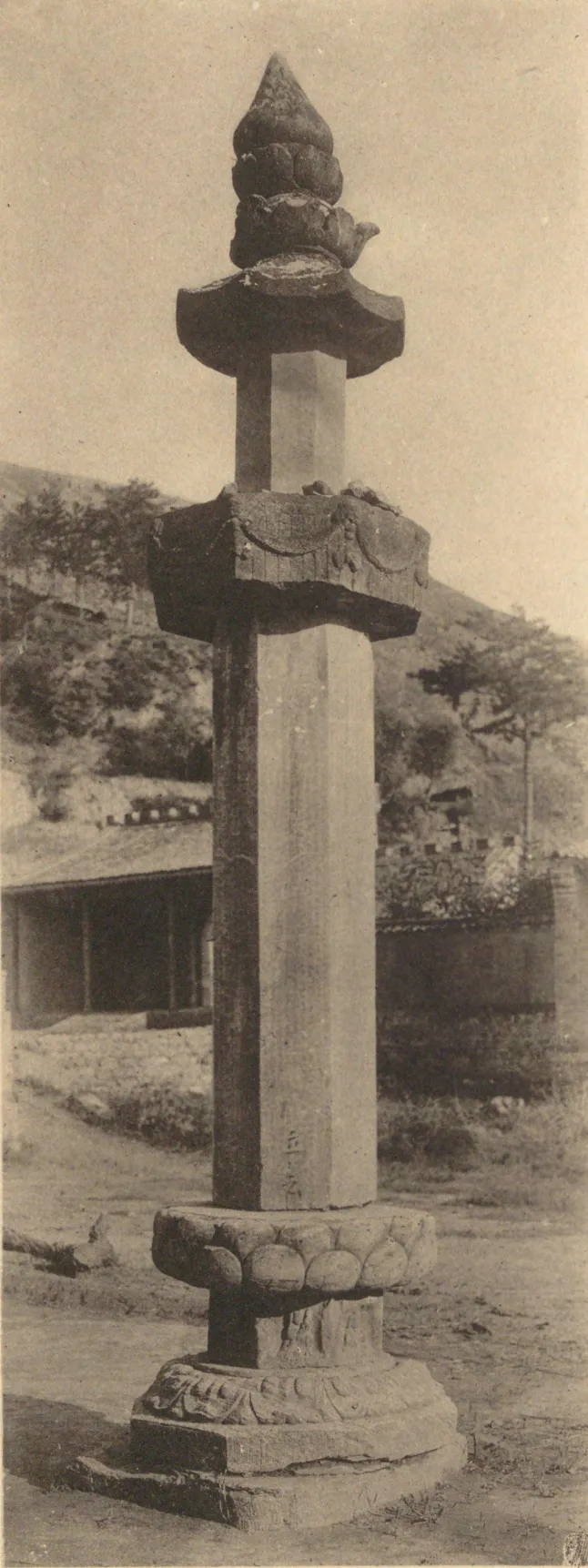
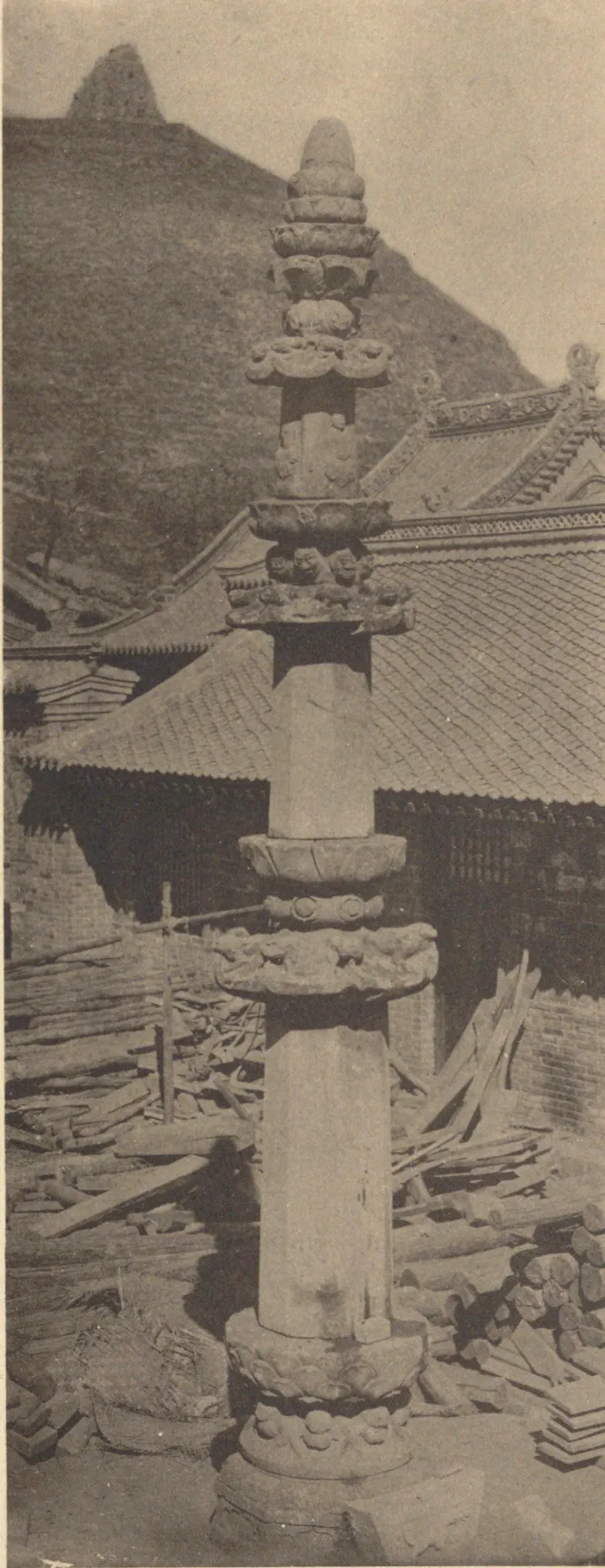
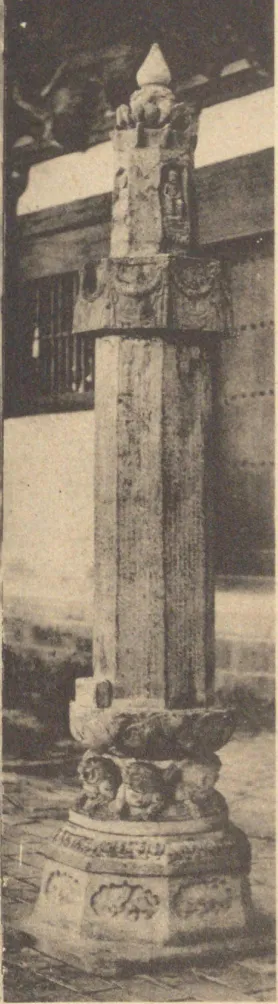
1930s
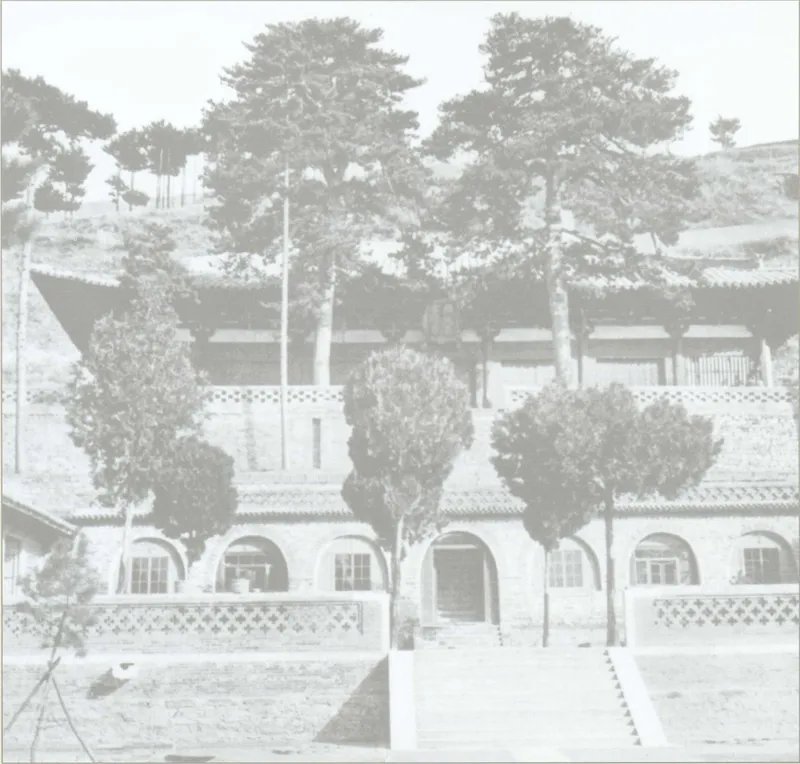
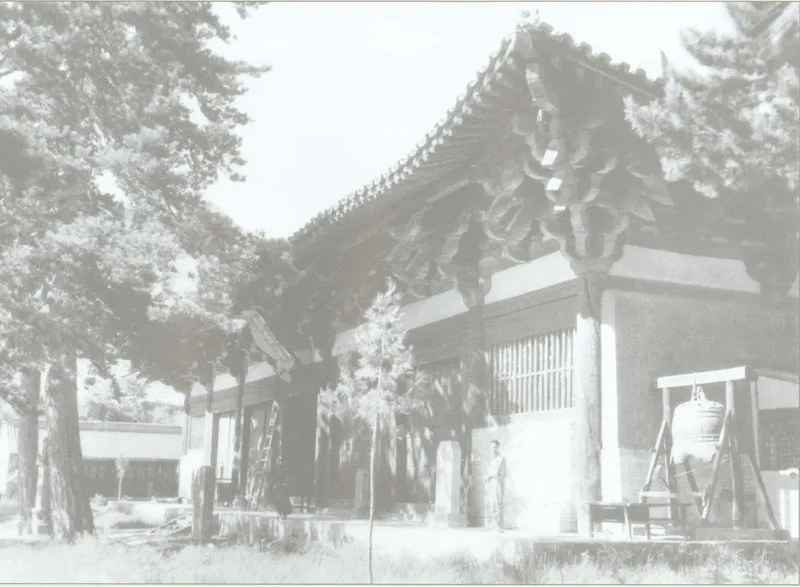
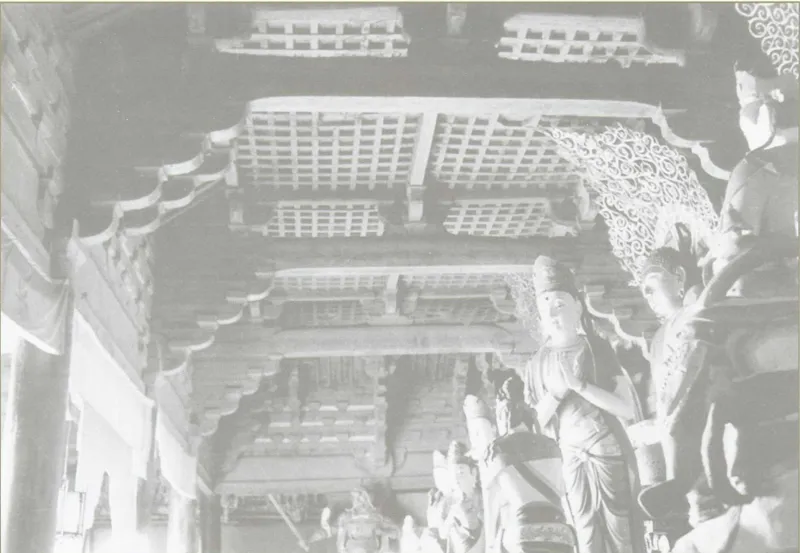
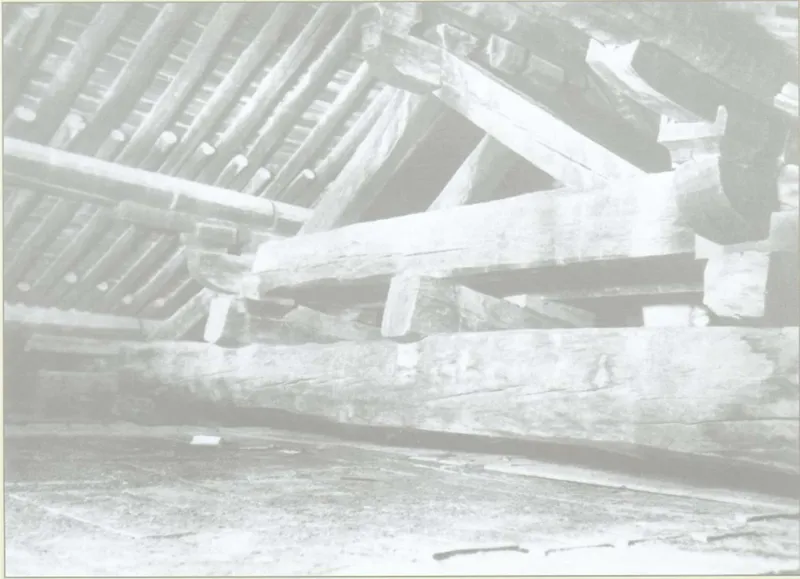
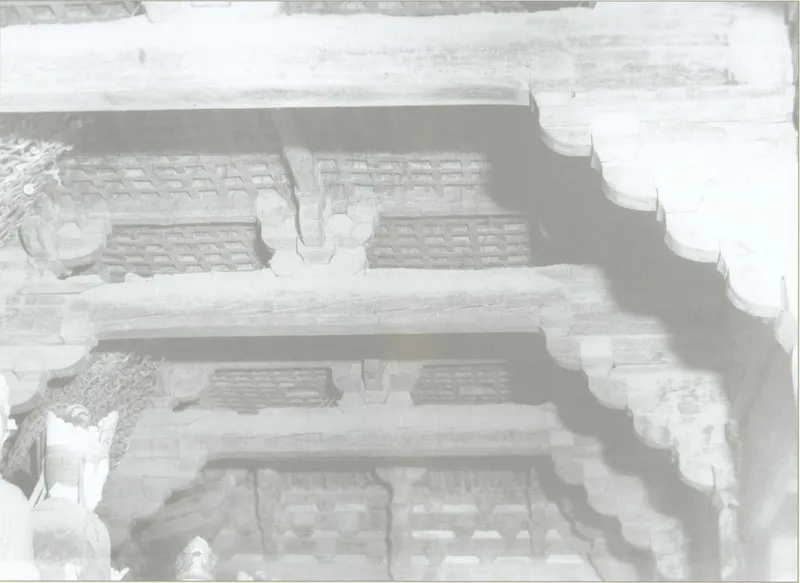
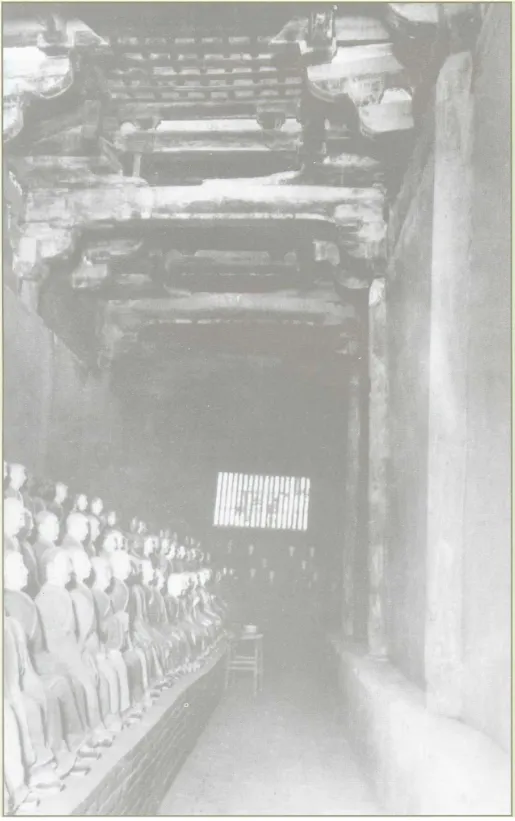
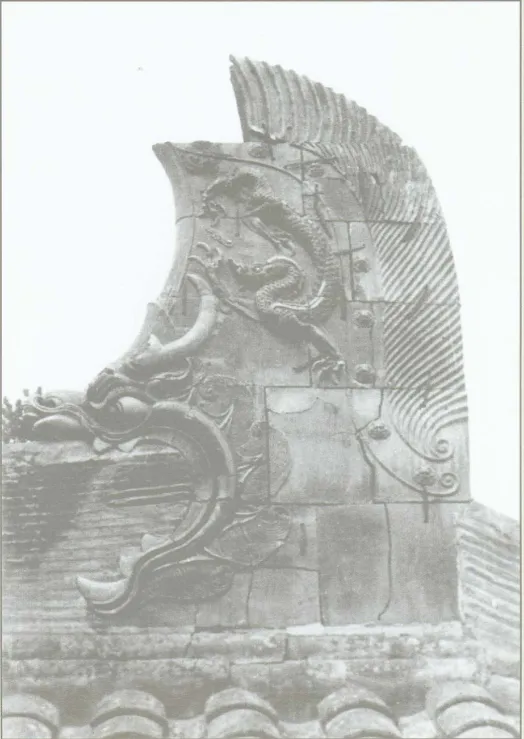
Volume I of Lin Zhu’s Zhongguo Gu Jianzhu Tudian (Illustrated Dictionary of Chinese Ancient Architecture), edited and published in 1999, includes images of Foguang Temple taken by Liang Sicheng and others, concentrated on pages 124-132 of the book. This set of photographs from the edited volume fills in details of the great hall’s exterior, the bracket sets and lattice ceiling, the Buddha images on the rear wall, the beam framework, the owl’s-tail ridge ornament on the main ridge, the founder’s pagoda, the Manjushri Hall, and the donor images; the images below are cropped to the photograph boundaries and exclude the survey drawings and marginal captions.