Introduction
The history of Huayan Temple left behind two dates from the very start. On the beam framework of the Hall of the Bhagavat Sutra Repository is a construction inscription of the 7th year of the Chongxi era of the Liao (1038), which records the official titles of the donor Yang Youxuan and fixes the date of the work precisely to the 15th day of the ninth month; the History of the Liao, however, dates the founding of Huayan Temple to the 8th year of the Qingning era (1062) and states that stone and bronze statues of the Liao emperors were enshrined in the temple. The former remained on the building’s beam framework, the latter entered the dynasty’s geographical treatise; the two records together point to a temple of the Liao Western Capital that housed images of the Liao emperors, and at the same time preserve a timeline of its early history that does not yet fully coincide.
The wartime fires at the end of the Liao and the beginning of the Jin nearly severed this history. The Record of the Rebuilding of the Bhagavat Sutra Repository, of the 2nd year of the Dading era of the Jin (1162), looks back on the fighting of the final Baoda years and states that after the capital fell, of Huayan Temple “the halls, pavilions, and towers were in an instant reduced to ashes,” and only the refectory, the kitchens and storerooms, the pagoda, the sutra repository, and the portrait hall remained. In the 3rd year of the Tianjuan era (1140), several monks walked across the ruined site and deliberated on continuing the unfinished work of their predecessors. Thereafter halls of nine and of seven bays were rebuilt in the temple, and pavilions, a bell tower, and a triple gate were added; men such as Shengxue also leveled the damaged courtyard ground, planted flowers and trees, and awaited the later works. It was not only the buildings that were rebuilt: the inscription also records that the monastic community founded a Bhagavat fellowship and traveled through prefectural and county towns, villages, and rocky valleys in search of scattered sutra scrolls; only after three years did the scrolls and shelf-marks of the repository match completely once more.
After the temple was restored, the Liao imperial images remained part of Huayan Temple’s identity. In the 6th year of the Dading era of the Jin (1166), Emperor Shizong of the Jin came in person to Huayan Temple to view the bronze statues of the late Liao emperors and ordered the head monk to guard them carefully. When the History of the Yuan later records how Shi Tianlin argued over an image left by the Song ruler, he still cited as an example: “The bronze statues of the rulers and consorts of the Liao state that are in the Western Capital survive to this day.” The stele of the monk Minggong, of the 10th year of the Zhiyuan era (1273), records another round of restoration: the great hall, the abbot’s quarters, the kitchens and storerooms, and the monks’ rooms—what was decayed was renewed, what was abandoned was revived—and the lost sutras were supplemented; the temple also set up bathhouses, an apothecary, warehouses, and rental dwellings in the marketplace, whose income sustained the monks’ daily livelihood.
The Shanxi General Gazetteer of the Yongzheng era records that in the 3rd year of the Hongwu era of the Ming (1370), the temple hall was for a time converted into the Dayou granary; in the 24th year of the Hongwu era, the Monastic Registry Office was established at the sutra repository, and the temple was able to be restored. The local gazetteer already shows two Huayan Temples, one inside the west gate and one to the southeast of the county. The surviving Record of the Rebuilding of Huayan Temple recalls that until the Qing period the Mahavira Hall, the Hall of the Bhagavat Sutra Repository, and the Haihui Hall still stood, while the other pagodas, pavilions, and towers had for the most part ceased to exist.
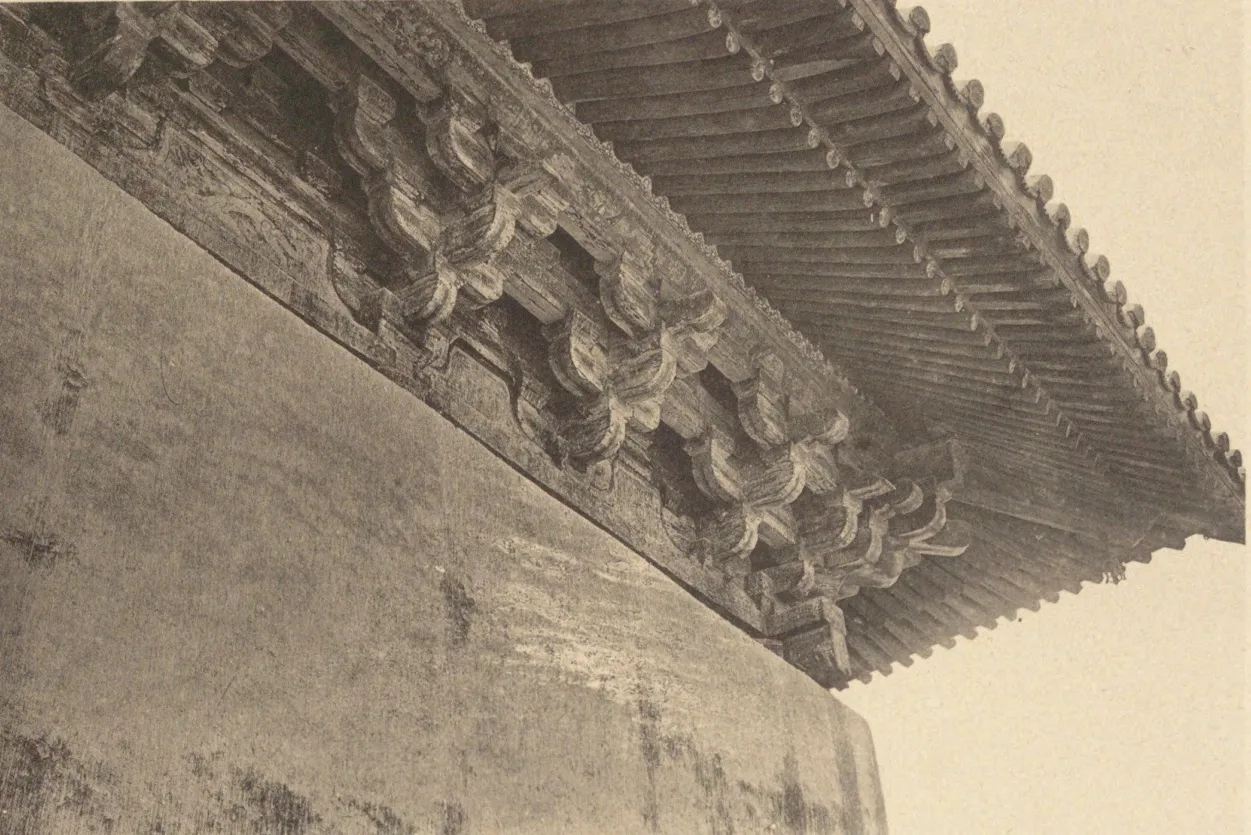
The great many photographs left by the twentieth century gave this rise and decline a face that can be cross-referenced. Tokiwa Daijo and Sekino Tadashi included in their work Shina Bunka Shiseki the Buddha hall of the Upper Huayan Temple, the Hall of the Bhagavat Sutra Repository of the Lower Huayan Temple, as well as the Buddha statues within and the Jin-dynasty rebuilding stele; the 1930 edition of Ajia Taikan preserved the façade of the Upper Huayan Temple, and the subsequent volumes then recorded the Mahavira Hall, murals, the wooden framework, and an incense burner; in the survey photographs of Liang Sicheng and others, the later-vanished Haihui Hall can also be seen. The lenses of different eras preserved the halls, statues, inscriptions, and courtyards one by one, and thus became the basis for later identifying architectural changes.
The Haihui Hall was demolished after these photographs were taken. The Directive on the Protection of Ancient Cultural Buildings, issued by the Government Administration Council of the Central People’s Government on 6 July 1950, records that this Liao-dynasty building of the Lower Huayan Temple had been demolished by the Xiasipo Primary School, which was at the time occupying the temple on loan.
In 2008, the city of Datong began the rebuilding of Huayan Temple, which was completed in 2010. The building record lists thirty newly constructed structures, including the mountain gate, the bell and drum towers, the Puguangming Hall, the Manjushri and Samantabhadra Pavilion, a pagoda, and monastic quarters, and records that the temple’s grounds were expanded from 22 to 100 mu. From the 1038 inscription on the beam of the Hall of the Bhagavat Sutra Repository, to the Jin-dynasty rebuilding stele and the modern photographs, and then to the newly built mountain gate and pavilions, Huayan Temple—through each contraction and each fresh expansion—left behind texts, buildings, or images that can be set side by side.
Historical Documents
Bojia Jiaozang Dian Liangjia Tiji (Beam Inscription of the Hall of the Bhagavat Sutra Repository)
推诚竭节功臣,大同军节度,云、弘、德等州观察处置等使、荣禄大夫、检讨太尉、同政事门下平章事、使持节云州诸军事、行云州刺史、上柱国、弘农郡开国公、食邑肆仟户、食实封肆百户杨又玄。
Yang Youxuan, meritorious official “of full sincerity and exhausted loyalty,” military governor of the Datong Army, commissioner for observation and administration of the prefectures of Yun, Hong, De, and others, grand master of the Rongluo rank, grand marshal for investigation, joint administrator of governmental affairs and chancellor, commander with insignia of all the troops of Yun prefecture, acting prefect of Yunzhou, Upper Pillar of the State, founding duke of Hongnong prefecture, with a fief of 4,000 households and an actual fief of 400 households.
维重熙七年岁次戊寅玖月甲午朔十五日戊申时建。
Erected at the wushen hour of the 15th day, when the ninth month began on the jiawu day, in the 7th year of the Chongxi era, the wuyin year.
Liao Shi (History of the Liao)
辽既建都,用为重地,非亲王不得主之。清宁八年,建华严寺,奉安诸帝石像、铜像。
Once the Liao had established their capital, they treated the place as one of importance, which none but an imperial prince might govern. In the 8th year of the Qingning era, Huayan Temple was built, and the stone and bronze statues of the emperors were enshrined therein.
Xijin Fu Changping Yizhong Chuang Ji (Record of the Dharani Pillar of the Changping Charitable Cemetery in Xijin)
时西京大华严寺提点诠悟大德,法称示化,游方驻锡于北禅院,开大乘菩萨戒坛,闻白前事,遽发大悲,与院主运颐领诸徒众,就诣其所,依教凭缘,运心拯济。作法已竟,信步而回。
At that time the superintendent of the Great Huayan Temple of the Western Capital, the venerable Quanwu, whose Dharma name and works were known, traveled on pilgrimage and rested his staff at the Northern Chan Cloister, where he opened the Mahayana bodhisattva precept platform. Hearing of the matter related above, he was at once seized with great compassion, and together with the cloister prior Yunyi and the throng of disciples went to that place to render aid with all his heart, in accordance with the teaching and as circumstances allowed. The rites completed, he returned at a leisurely pace.
Jin Shi — Dili Shang (History of the Jin — Geography, Part 1)
大同。倚。辽析云中置,金因之。有平城外郭、盐场、如浑水、桑乾河、纥真山,有辽帝后像,在华严寺。镇一:奉义。
Datong. Administrative seat. Split off from Yunzhong and established by the Liao, retained by the Jin. It has the outer wall of Pingcheng, a saltworks, the Ruhun River, the Sanggan River, and Mount Gezhen; also images of the Liao emperors and empresses, which are in Huayan Temple. One market town: Fengyi.
[Yongzheng] Shanxi Tongzhi ([Yongzheng] General Gazetteer of Shanxi)
华严寺二,一在西门内,辽建,内有南北阁,东西廊。北阁下铜石像数尊,中石像五,男三女二;铜像六,男四女二。内一铜人,衮冕帝王之像,垂足而坐,余皆巾帻常服危坐。相传辽帝后像。金重熙七年,建薄伽教藏于殿东南。明洪武三年,改殿为大有仓。二十四年,即教藏置僧纲司,复立寺。一在县东南,辽建,明洪武间重修。
There are two Huayan Temples. One lies inside the west gate, built by the Liao, with a north pavilion and a south pavilion and east and west corridors within. Beneath the north pavilion stand several bronze and stone statues: five of stone in the center—three male and two female—and six of bronze—four male and two female. Among them is a bronze figure, the image of an emperor in dragon robe and crown, seated with feet hanging down; the rest sit upright in headcloth and everyday dress. Tradition holds them to be images of the Liao emperors and empresses. In the 7th year of the Chongxi era of the Jin, the Bhagavat Sutra Repository was built to the southeast of the hall. In the 3rd year of the Hongwu era of the Ming, the hall was converted into the Dayou granary. In the 24th year, the Monastic Registry Office was established at the sutra repository and the temple was restored. The other lies to the southeast of the county, built by the Liao and repaired during the Hongwu era of the Ming.
Da Jin Guo Xijing Da Huayan Si Chongxiu Bojia Zangjiao Ji (Record of the Rebuilding of the Bhagavat Sutra Repository at the Great Huayan Temple of the Western Capital of the Great Jin)
今此大华严寺,从昔已来,亦是有教典矣。至保大末年,伏遇本朝大开正统,天兵一鼓,都城四陷,殿阁楼观,俄而灰之,唯斋堂、厨库、宝塔、经藏,洎守司徒大师影堂存焉。
This Great Huayan Temple has had its sutras and scriptures since ancient times. But in the final years of the Baoda era, when our dynasty broadly opened the legitimate succession, the celestial troops beat the drum but once, and the capital fell on all four sides; the halls, pavilions, and towers were in an instant reduced to ashes. Only the refectory, the kitchens and storerooms, the pagoda, the sutra repository, and the portrait hall of Master Situ, the guardian, remained.
至天眷三年闰六月间,则有众中之尊者僧录通悟大师、慈济广达大师、通利大德、通义大师、辩慧大德、妙行大师,洎首座义普、二座德祚等,因游历于遗址之间,更相谓曰:曩者我守司徒大师秀出群伦,兴弘三宝,霈教雨而润民苗,鼓化风而熏佛种,岂特人天之仰止,亦惟在上者师之。爰出官财,建兹梵宇,壮丽严饰,稀世所有,一旦隳残,以至于此,诚可以痛乎哉!惜乎哉!为人之后者,苟不能继其绝而兴其废,补已弊而完已隳者,能无愧乎?殊不闻厥父菑,厥子弗肯获;厥父基,厥子弗肯构,则俗人尚为之诮尔,况我等之为释子,可不念哉!
In the intercalary sixth month of the 3rd year of the Tianjuan era, there were among the venerables of the community the Sangha registrar, Master Tongwu, Master Ciji Guangda, the venerable Tongli, Master Tongyi, the venerable Bianhui, and Master Miaoxing, together with the head seat Yipu and the second seat Dezuo, among others. Traveling across the ruined site, they said to one another: “In former days our Master Situ, the guardian, stood out from the multitude; he promoted the Three Jewels, made the rain of the teaching moisten the people’s seedlings and the wind of conversion permeate the seed of the Buddha. Not only did humans and celestial beings look up to him, but even those on high took him as their teacher. Thus he brought forth public funds and raised this Buddhist sanctuary, magnificent and solemnly adorned, such as the world rarely had. In a single day it was destroyed and reduced to this state—truly, how painful! How lamentable! One who, being a descendant, cannot carry on what has been broken off and revive what has decayed, mend what is damaged and restore what has collapsed—how could he be without shame? Have you not heard: if the father clears the field and the son will not reap; if the father lays the foundation and the son will not build, then even common folk reproach him? How much more should we, who are sons of the Buddha, bear this in mind!”
已而玄先出己之净财,仍化同居之清众,暨诸外内信心之流,加之援助,乃仍其旧址,而特建九间、七间之殿,又构成慈氏、观音、降魔之阁,及会经、钟楼、三门、垛殿,不设期日,巍乎有成。其左右洞房、四面廊庑,尚阙如也。其费十千余万,所给甚易尔。奈何天与之始,而不与之终,事见其作,而不见其成。哀哉!不数年,上五人乃化,倾城士庶,举多哀恸者,皆以此也。
Thereupon Xuan first brought forth his own pure wealth, then moved the pure community of his fellow residents and the believers within and without to add their aid, and upon the old site he expressly built halls of nine and of seven bays. He further constructed the pavilions of Maitreya, of Avalokiteshvara, and of the Subduing of Demons, as well as the sutra-reading hall, the bell tower, the triple gate, and the flanking halls; without setting a term, the work rose up lofty and complete. The side chambers to left and right and the corridors on all four sides were still wanting. The cost exceeded a hundred million, yet the raising of it came easily. But alas—Heaven granted the beginning, not the end; the work was seen to be begun, but was not seen to be completed. How sad! Within a few years the aforesaid five men passed away, and the whole city, officials and commoners alike, mourned deeply—this was the reason.
呜乎!昔人之同力,功尚未终,主事者先归,谁复为葺?果见星霜屡变,佛宇荒凉,顾左右前后之间,唯瓦砾蒿莱而已,虽有殿堂,岂堪游礼者乎?则有故僧录大师门人省学者,一日慨然念先师等之勤,曰:昔者服劳,兴修废业,其事未终,而奄然长往,我为之后,宁不痛兹!虽未能嗣续而大成之,盍不务专精而守视尔。于是聚徒兴役,刈楚翦茨,基之有缺者完其缺;地之不平者治以平,四植花木,中置栏槛,其费五百余万焉。此乃不使前人之功坠,以待将来之缘合,暨得成全,亦今日之力也。
Alas! The men of former days had worked in concert, but the work was not yet finished when the leaders departed first—who then would repair it? And indeed, as stars and frost changed again and again, the Buddhist sanctuary grew desolate; looking around, to left and right, before and behind, there was only rubble and weeds. Though halls stood, how could they suffice for pilgrims? There was then a disciple of the late Sangha registrar, named Shengxue, who one day sighed as he recalled the diligence of his masters and said: “In former days they toiled to renew the fallen work; the task was not yet finished when they suddenly departed forever. I, their successor, how could I not grieve at this? Though I cannot carry it on and bring it to great completion, should I not at least strive with all my heart to preserve and watch over it?” So he gathered disciples and undertook the labor, cut the brambles and trimmed the thorns; where the foundation was defective, he made good the defect; where the ground was uneven, he leveled it; all around he planted flowers and trees and set railings in the midst. The cost exceeded five million. Thus he kept the work of his predecessors from falling, awaiting the conjunction of future circumstances; that it may one day be brought to completion is also the merit of the present day.
而后因礼于药师佛坛,乃睹其薄伽教藏,金碧严丽,焕乎如新。唯其教本错杂而不完,考其编目,遗失者过半。遂潜运于悲心,庶重兴于素教。将弃其遗本,愍家之旧物;拟补以新经,虑字之讹错,䌷绎再三,皆不若择其一。同者补而全之。俄而具以其事言于当寺沙门惠志、省涓、德严等三人焉,庶几协力,克成厥功。彼人闻是语已,一意欣而奉之,遂聚其清信家,乃立为薄伽邑。佥曰:凡事为之有作,须头目而后行。然而托之大者,易以建效,非其人则劳而无功。反复咨询,未知其可。众乃同声而唱言曰:有兴严寺前临坛传戒慈慧大师可是师也,素具慈悲,双修性相,旁施惠力,常转于法轮,济拔群生,超登乎觉岸。傥肯为缘,事无难矣。
Afterward, while paying homage before the altar of the Bhaisajyaguru Buddha, he beheld the Bhagavat Sutra Repository, gold and azure, solemn and splendid, radiant as new. Only the texts were jumbled and incomplete; examining the catalogue, more than half had been lost. Then a compassionate heart stirred within him in silence, and he wished to make the pure teaching flourish anew. Were he to discard the transmitted texts, he pitied the old possessions of the house; were he to think of supplementing them with new sutras, he feared errors of writing. Having pondered it again and again, he concluded that the best course was to choose between the two: what matched, to supplement and make whole. At once he laid the matter before the three monks of the temple, Huizhi, Shengjuan, and Deyan, that they might join forces and accomplish the work. When those men heard these words, they received them with one mind and gladly took them up, gathered the pious believing families, and founded a Bhagavat fellowship. All said: “In everything undertaken, there must first be a leader before it can proceed. Yet to whom a great task is entrusted, it is easy to achieve results; if it is not the right man, the labor is in vain.” After repeated consultation, they still did not know who would be suitable. Then all cried out with one voice: “Master Cihui, who formerly transmitted the precepts before the platform at Xingyan Temple—he is the master. Endowed from of old with compassion, he cultivates both nature and form, dispenses the power of kindness all around, turns the Dharma wheel unceasingly, saves the living beings, and ascends to the shore of enlightenment. If he would consent to form the bond, the task would not be difficult.”
是时,同跻状而请之曰:愿住寺设度,而为邑长,加之援助,圆满功德,我等之素愿也。师乃答其众望,俯而从之,则于正月元日、七月望辰,升座传演,鸠集邑众所获施赠,以给其签经之直,然后遍历乎州城郡邑、乡村岩谷之间,验其阙目,从而采之。或成帙者,或成卷者,有听赎者,有奉施者,朝寻暮阅,曾不惮其劳,日就月将,益渐盈其数,岁历三周,迄今方就。其卷轴式样,新旧不殊,字号诠题,后先如一,此不亦难哉!又况难聚易散者,物之常情;恶求喜施者,人之同病。今兹藏教,废已久矣,苟匪斯人,终为弃物,其何复完之有?且省学之辈,皆异人也,非止乎进修为念,亦颇以学行著名。同心戮力,不惮经营,积日累功,圆兹教典,亦佛家之美事尔。原其所用心者,颇有显奘之风焉。
At that time, together they submitted a petition and entreated him, saying: “We wish that you would reside at the temple, confer the ordination, and, as head of the fellowship, lend your aid to perfect the meritorious work: this is our sincere wish.” The master answered the expectation of all and complied with humility. Thus, on the first day of the first month and the full-moon day of the seventh month, he ascended the seat to teach and expound, gathered the donations and offerings obtained by the fellowship to cover the cost of acquiring the sutras, and then traveled throughout prefectural and county towns, villages, and rocky valleys, verified the missing titles, and collected them. Some existed as fascicles, others as scrolls; some could be redeemed, others were donated. From morning to evening he searched and examined without fearing the toil; day by day, month by month, the number gradually grew. After three full years it was at last complete. The form of the scrolls did not differ between old and new, the shelf-marks and titles matched from first to last—is this not difficult? All the more so since it is the ordinary nature of things to be hard to gather and easy to scatter, and the common failing of men to loathe acquiring and delight only in giving. Now this sutra repository had long been in ruin; had it not been for this man, it would in the end have become a discarded thing—how could it ever have been made whole again? Moreover, Shengxue and his fellows were all extraordinary men, mindful not only of their own cultivation but also renowned for their learning and conduct. With one mind and united strength, undaunted by toil, they piled up days and merit and perfected these sutras and scriptures—this too is a fine deed of the Buddha’s house. Considering what moved them, they had much of the spirit of Xuanzang.
既而以事嘱于余,而请铭焉。余亦惜其专精致志,迓续先功,舍其遗而补其阙,真释氏之子耶!恐后之来者,不知今日之勤,而忽于宝护,因书以记之,而勒之石。其辞曰:
Then they entrusted the matter to me and asked for an inscription. I too esteemed how, with wholehearted application and concentrated will, they carried on the work of their predecessors, preserved what had been transmitted, and supplemented what was missing—truly sons of the Buddha! Fearing that those who come after may not know the diligence of the present day and may neglect the guarding of the treasure, I write this to record it and engrave it in stone. The words say:
梵教始生,生于西域,风化旁流,流及中国。肇自摩腾,弟多传泽,济拔群生,无边功德。功德盖多,依归为则,世唇汉唐,传之不息,地久天长,绵绵罔极。精舍伽蓝,宝藏各得,大华严家,素有是籍。兵火流离,缺其简册,省学之徒,视之怆恻。迨与重兴,同心协力,弃其遗编,心无不衋。补以新经,字多讹忒,爰历诸方,躬勤采摭。能者助之,与给其直,日就月将,纂成嘉绩。新旧一同,宛如合璧,目见耳闻,欣然有色。亿万斯年,家风辉赫。
The Buddhist teaching first arose in the Western Regions; its transforming power flowed all around and reached China. From Kasyapa Matanga onward, through many successors, its grace spread and saved the living beings—merit without limit. The merit being so great, taking refuge became the rule; through the ages of Han and Tang it was transmitted without cease, as lasting as earth and heaven, continuing without end. Monasteries and sangharamas each obtained their treasure; the house of the Great Huayan had these scriptures from of old. In wars and fires, in dispersal and flight, its volumes were left wanting; Shengxue and his disciples beheld this with sorrow. When they made it flourish anew, with one mind and united strength, they did not discard the transmitted volumes without inward grief. In supplementing them with new sutras, many characters were erroneous; so they traveled through all regions and gathered them themselves with diligence. The able helped them and gave them the price; day by day, month by month, they accomplished the excellent achievement. Old and new became one, like two halves of a jade disc joined; what eye saw and ear heard gladdened with radiant countenance. For myriads of years, may the glory of this house shine forth.
大定二年岁次壬午五月丁酉朔十四日庚戌巽时,沙门省学等立石。
At the xun hour of the 14th day, the gengxu day, when the fifth month began on the dingyou day, in the 2nd year of the Dading era, the renwu year, the monk Shengxue and others erected the stone.
Jin Shi — Shizong Shang (History of the Jin — Emperor Shizong, Part 1)
五月戊申,幸华严寺,观故辽诸帝铜像,诏主僧谨视之。
On the wushen day of the fifth month, he visited Huayan Temple, viewed the bronze statues of the late Liao emperors, and ordered the head monk to guard them carefully.
Yuan Shi (History of the Yuan)
江南道观偶藏宋主遗像,有僧素与道士交恶,发其事,将置之极刑。帝以问天麟,对曰:“辽国主后铜像在西京者,今尚有之,未闻有禁令也。”事遂寝。
In a Daoist temple in Jiangnan, an image left by the Song ruler happened to be kept. A monk, long at odds with the Daoists, exposed the matter, and it was intended to sentence those responsible to the extreme penalty. The emperor put the question to Tianlin, who replied: “The bronze statues of the rulers and consorts of the Liao state that are in the Western Capital survive to this day, and no prohibition has ever been heard of.” With that, the matter was laid to rest.
Xijing Da Huayan Si Foru Yuanzhao Minggong Heshang Beiming Bing Xu (Stele Inscription with Preface for the Monk Minggong, “Buddha-Sun of Perfect Enlightenment,” of the Great Huayan Temple of the Western Capital)
庚戌中,西京忽兰大官人府尹总管刘公,华严本主法师英公,具疏敬请海云老师住持本府大华严寺。海云邀师偕行。既至云中,海云抑师住持,代摄寺任。师天资粹美,难违上命,勉就住持。即其年九月十五日。师既主其柄,厚下宽明,励力公清,宗风大振。先是,德公长老摄持,院门牢落,庭宇荒凉,官物人匠,车甲绣女,充𣦼寺中,至是并令起之,移句他处。大殿、方丈、厨库、堂寮,朽者新之,废者兴之,残者成之。有同创建本寺藏教,零落甚多,或舄或补,并令周足。金铺佛熖,丹漆门楹,供设俨然,粹容赫焕,香灯灿列,钟鼓一新。非师有大因缘,孰能如是成就也?又于市面创建浴室、药局、塌房及赁住房廊近百余间,以赡僧费。洪规远虑,固以深矣。
In the gengxu year, the prefect and general administrator of the Western Capital, Lord Liu Hulan, and the original abbot of Huayan Temple, Dharma Master Ying, submitted a formal petition respectfully inviting the old master Haiyun to take charge of the prefecture’s Great Huayan Temple. Haiyun invited the master to accompany him. On reaching Yunzhong, Haiyun pressed the master to take charge and to administer the temple office in his stead. Of pure and excellent nature, the master found it hard to disobey the higher command and reluctantly took up the abbacy—it was the 15th day of the ninth month of that year. Once the master had taken the helm, he was generous to his subordinates and of broad clarity, exerting himself with rectitude and disinterest, and the spirit of the school was greatly revived. Previously, under the administration of the elder De, the cloister gate had fallen into ruin and the courtyard was desolate; official goods and artisans, carts, armor, and embroidering women filled the temple. Now he ordered them all removed and relocated elsewhere. The great hall, the abbot’s quarters, the kitchens and storerooms, and the monks’ rooms—what was decayed he renewed, what was abandoned he revived, what was damaged he restored. Of the sutras founded together with the temple, much had been scattered; in part he reinstated them, in part he supplemented them, and made all complete. Gilded were the Buddha-flames, vermilion-lacquered the door pillars, the offerings arrayed with solemnity, the pure countenances of resplendent brilliance, incense and lamps set out in gleaming rows, bell and drum entirely renewed. Had the master not had a great karmic bond, who could have achieved such things? He further built in the marketplace bathhouses, an apothecary, warehouses, and rental dwellings with corridors, nearly a hundred and more rooms, to sustain the monks’ expenses. His grand design and far-reaching foresight were, indeed, profound.
Record of the Rebuilding of Huayan Temple
Datong has since ancient times enjoyed the great renown of being a Buddha-land and a dragon city. Ever since the Northern Wei established their capital at Pingcheng, the imperial metropolis was rich in the Buddhist law; wondrous towers and sacred pagodas rose lofty, facing one another—this was its height. The two dynasties Liao and Jin carried on the imperial legacy of the Wei capital; as a secondary capital, the Western Capital revered Buddhism and honored the teaching, temples stood in abundance and monks gathered in throngs—a time of great flourishing. Huayan Temple was the largest Buddhist architectural complex of the Western Capital, magnificent and solemnly adorned, such as the world rarely had…
But alas, the fire of the fighting at the city gates struck the innocent; Huayan Temple suffered again and again the harm of wartime fires, so that by the Qing period only the Mahavira Hall, the Hall of the Bhagavat Sutra Repository, and the Haihui Hall remained. During the Kangxi era a small mountain gate, the Hall of the Heavenly Kings, a meditation hall, and corridors were added. The pagoda, the Puguangming Hall, the Manjushri and Samantabhadra Pavilion, and the bell and drum towers all lay in rubble. The Haihui Hall, in turn, was demolished at the beginning of the founding of the People’s Republic. Hemmed in by large buildings all around, Huayan Temple grew day by day more cramped and withered; and since, moreover, the upper and lower temples were administered separately, the sanctuary grew desolate, closed in upon itself, and declined ever further. Alas, Huayan Temple is a holy site of Buddhism, a treasury of cultural relics of incalculable value, whose guardianship is a duty. One who cannot carry on what has been broken off and revive what has decayed, mend what is damaged and restore what has collapsed—how could he be without shame?
In June 2008, the people of Datong resolved to rebuild Huayan Temple. Until its completion in September 2010, two years and two months elapsed, and the total cost of the work amounted to 410 million yuan. Thirty structures were newly built: the mountain gate, the bell and drum towers, the Puguangming Hall, the Bhaisajyaguru and Amitabha Hall, the Manjushri and Samantabhadra Pavilion, a pagoda, a bronze underground palace, the Treasure Repository Tower, the monastic quarters courtyard, and corridors; 2,100 square meters of murals were newly painted, 515 statues were modeled, 370,000 workdays were employed, 20,000 cubic meters of timber, 4.97 million gray bricks, 1.03 million tile pieces, 16,000 gold bricks, 2,500 cubic meters of stone, 100 tons of brass, 100,000 sheets of gold leaf, and 300,000 sheets of copper foil. One school and 786 residential and commercial households, covering 76,800 square meters, were demolished and relocated…
The temple’s grounds grew from 22 to 100 mu, and its built area from 6,043 to 22,468 square meters. The restored Huayan Temple brought the splendor of the Western Capital to life once more, golden and solemnly splendid, radiant as new, the Buddhist sanctuary lush and imposing to behold. To restore a temple in a flourishing age is an imperishable merit; a stone is erected to record it, that those who come after may reflect upon it.
Historical Photographs
1920s to 1930s
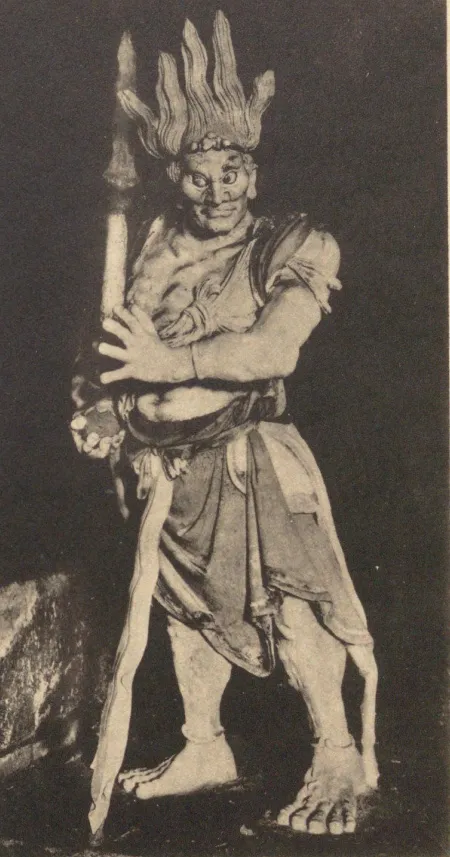
The first volume of Tokiwa Daijo and Sekino Tadashi’s Shina Bunka Shiseki (Historical Monuments of Chinese Culture) included survey photographs of the Upper and Lower Huayan Temples in Datong. Among the plates are details of the Buddha hall of the Upper Huayan Temple, its interior, the main hall, and the Guandi temple; and, at the Lower Huayan Temple, the east side and details of the Bhagavat Sutra Repository, the three buddhas within the hall, as well as the stele of the rebuilding of the Bhagavat Sutra Repository of the 2nd year of the Dading era of the Jin, the figures of the Four Heavenly Kings, and the Vajrapani guardian figures.
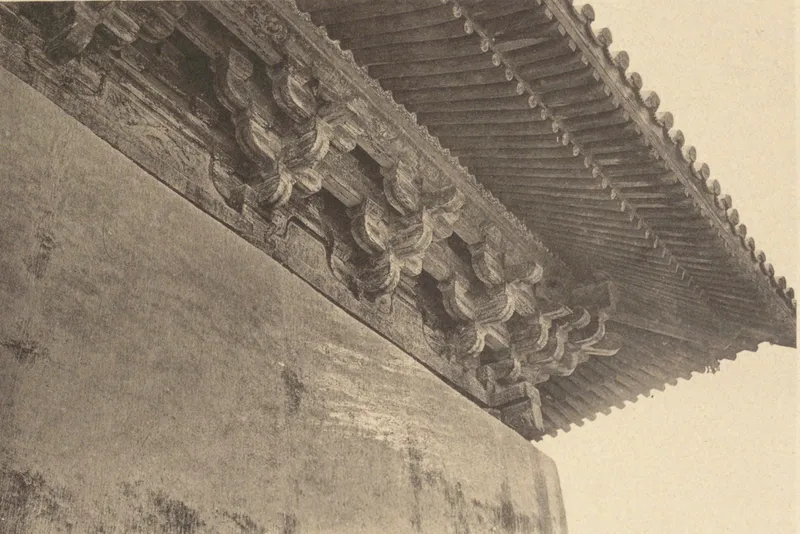
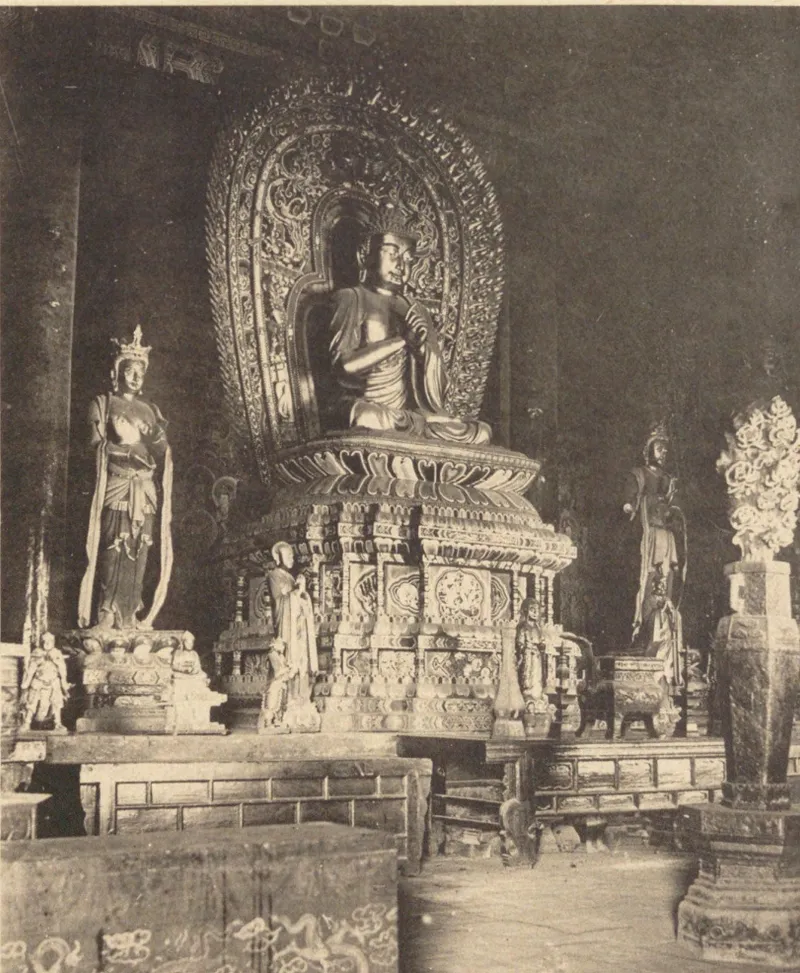
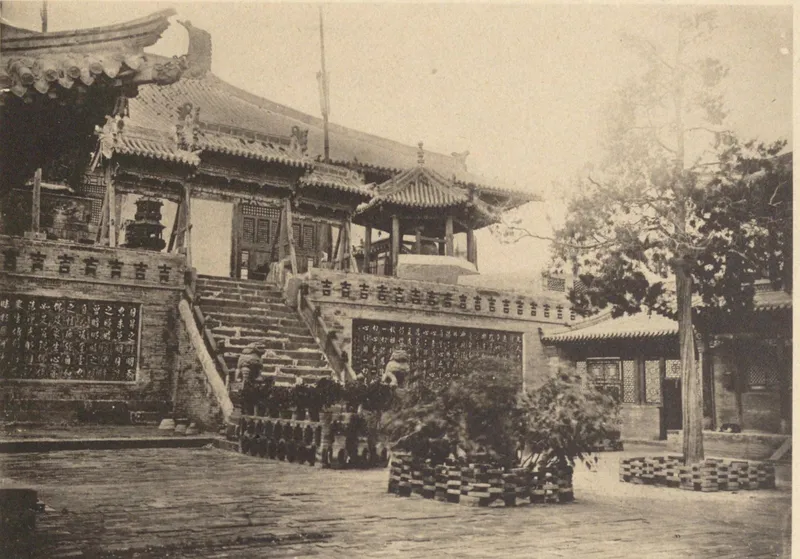
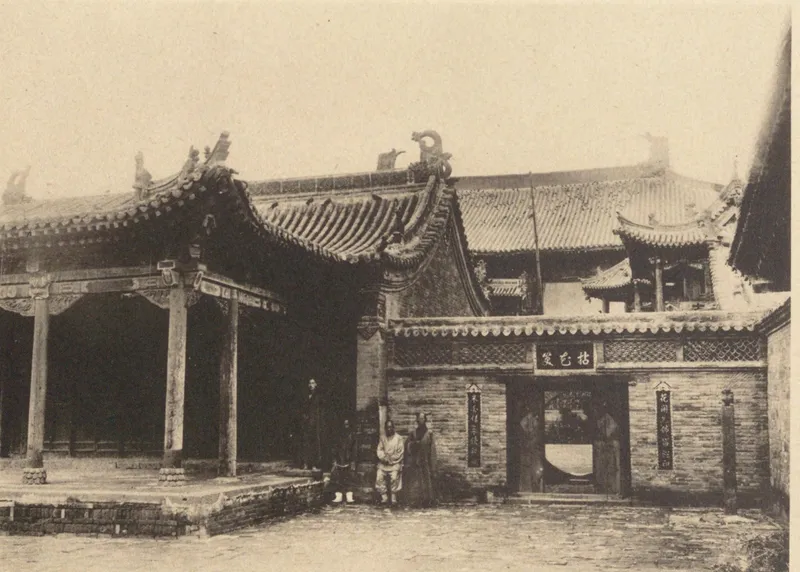
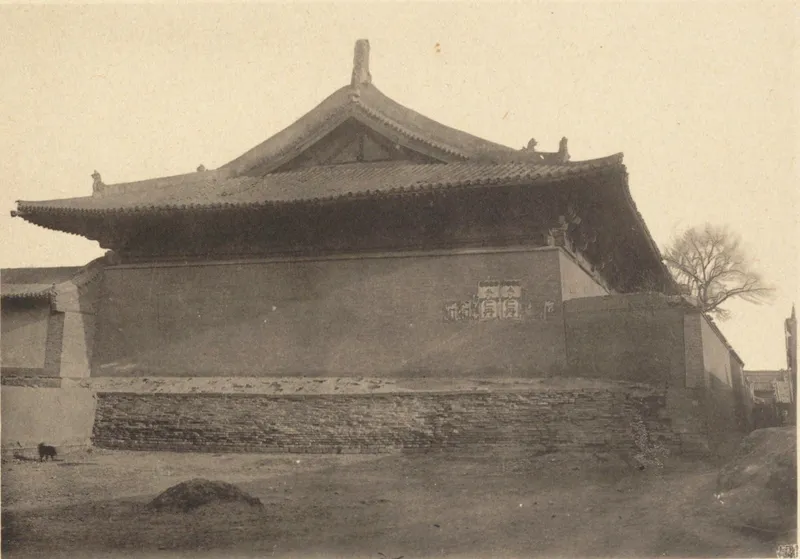
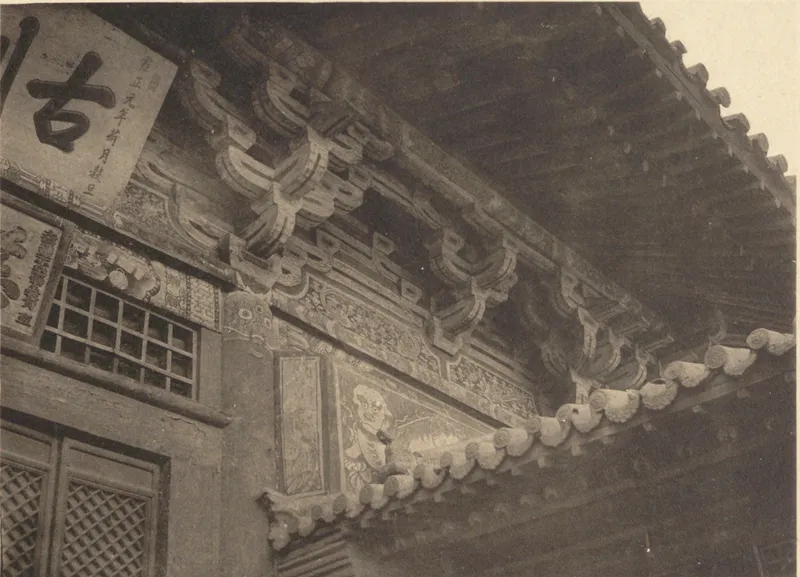
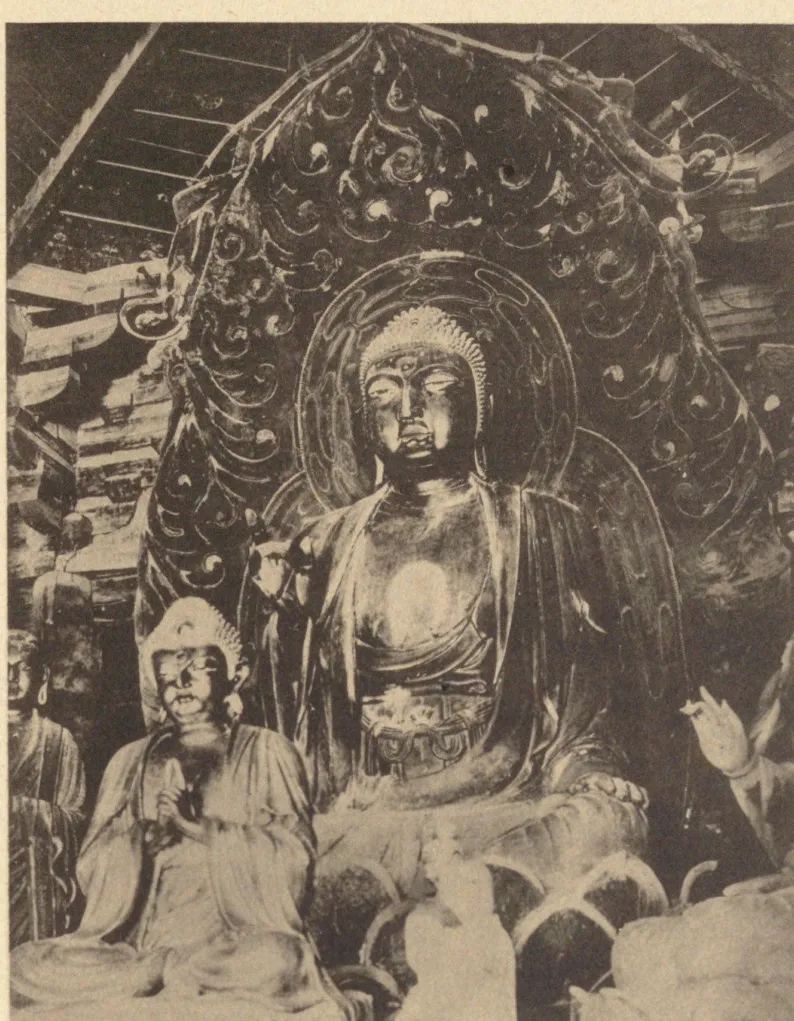
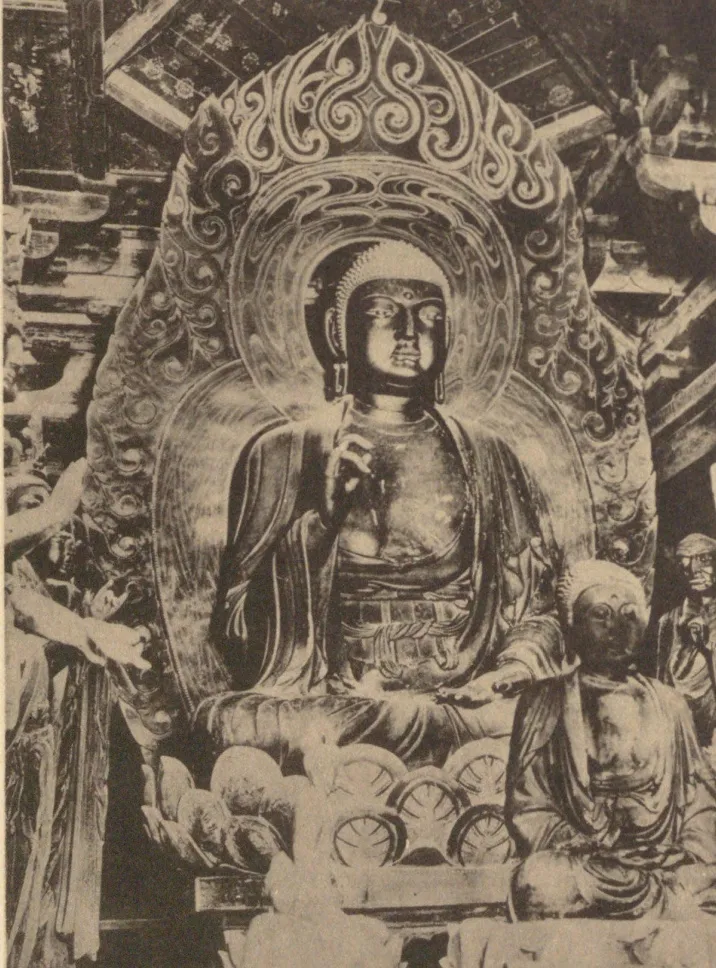
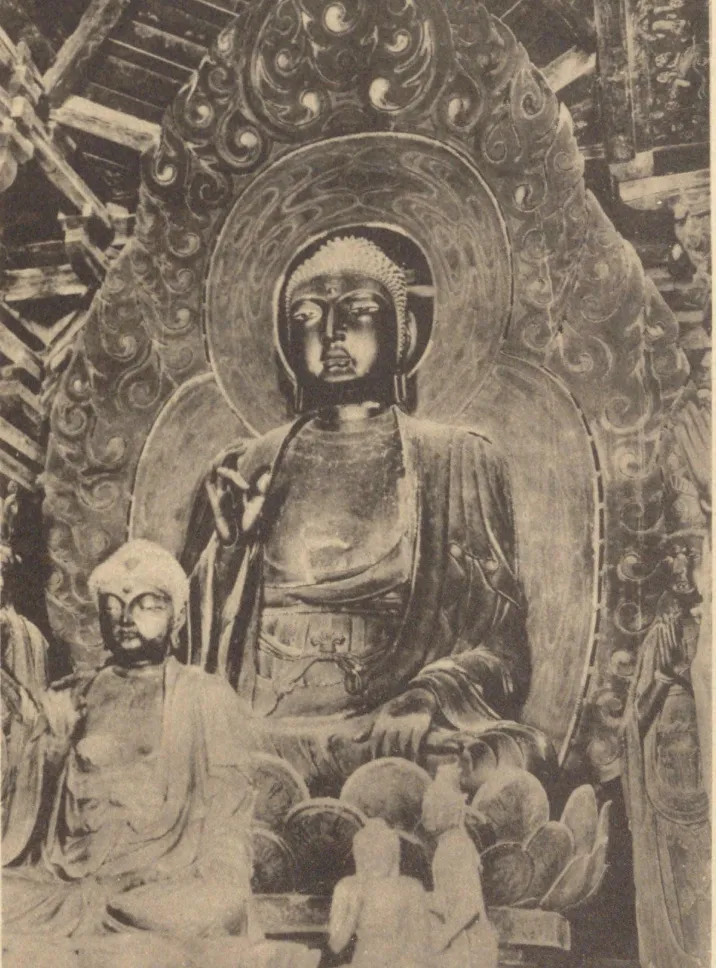
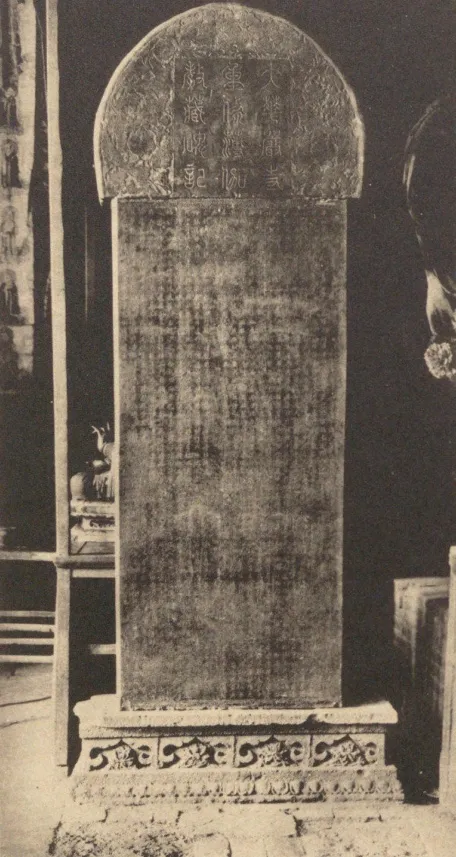
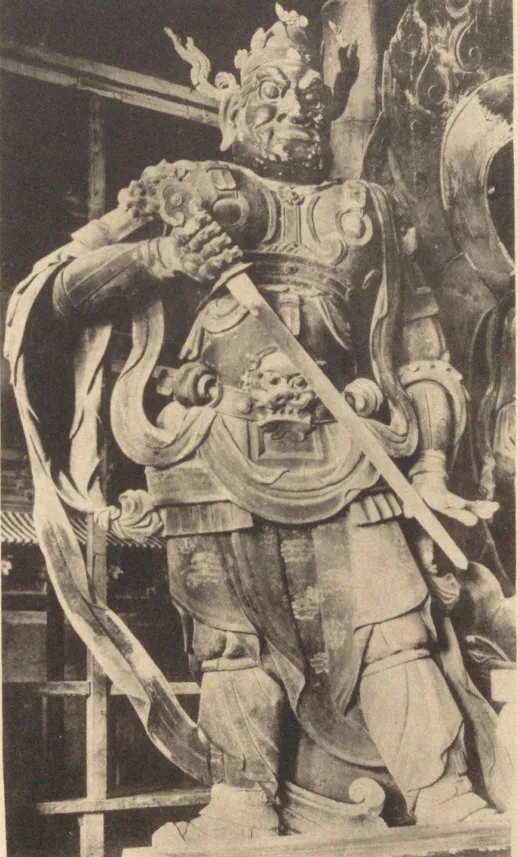
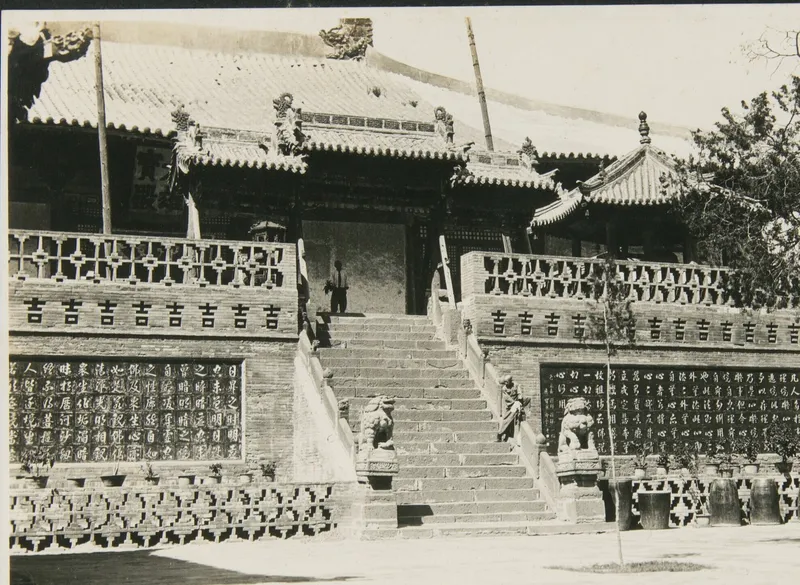
1930
The 79th installment of the seventh volume of Ajia Taikan included a historical front view of the Upper Huayan Temple; the original image is marked “photographed in 1930.”
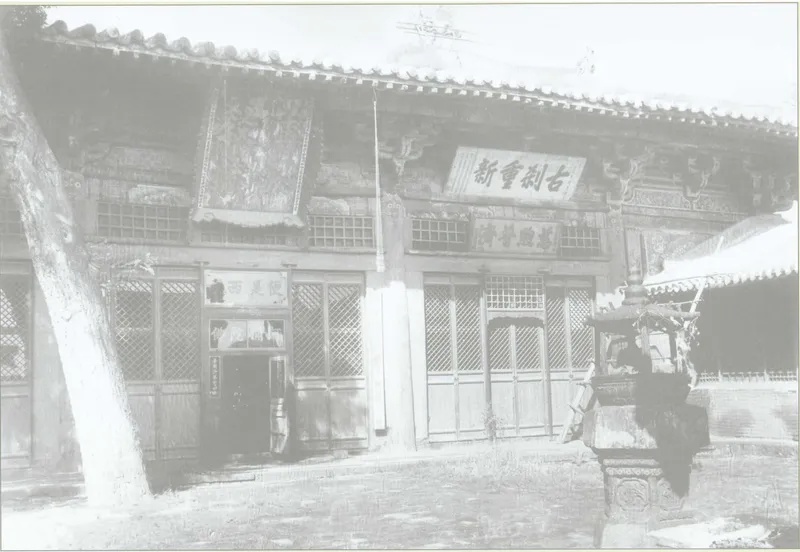
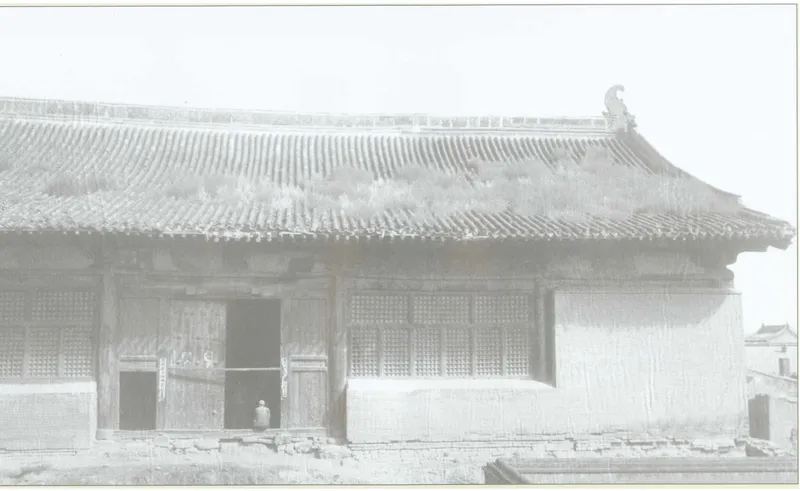
1930s
The first volume of the Illustrated Compendium of Chinese Ancient Architecture, edited by Lin Zhu, gathers the photographs of Huayan Temple taken by Liang Sicheng and others during their early surveys; among them, the front view of the sutra repository hall and the Haihui Hall of the Lower Huayan Temple can be compared with the state of the buildings before and after the later restorations. Since this is a 1999 compiled edition and the captions do not note the date of each photograph individually, they are assigned to the early survey phase of Liang Sicheng and others and placed in the 1930s.
1936 to 1937
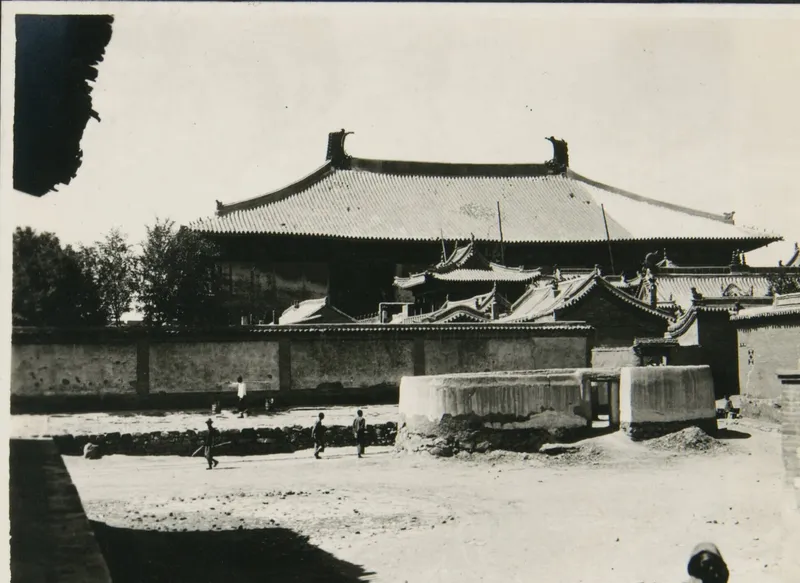
The 152nd installment of the thirteenth volume of Ajia Taikan included a distant view of the Mahavira Hall of Huayan Temple and the surrounding courtyards. The thirteenth volume was published between the 11th and 12th years of the Showa era, that is, 1936 to 1937.
1938 to 1939
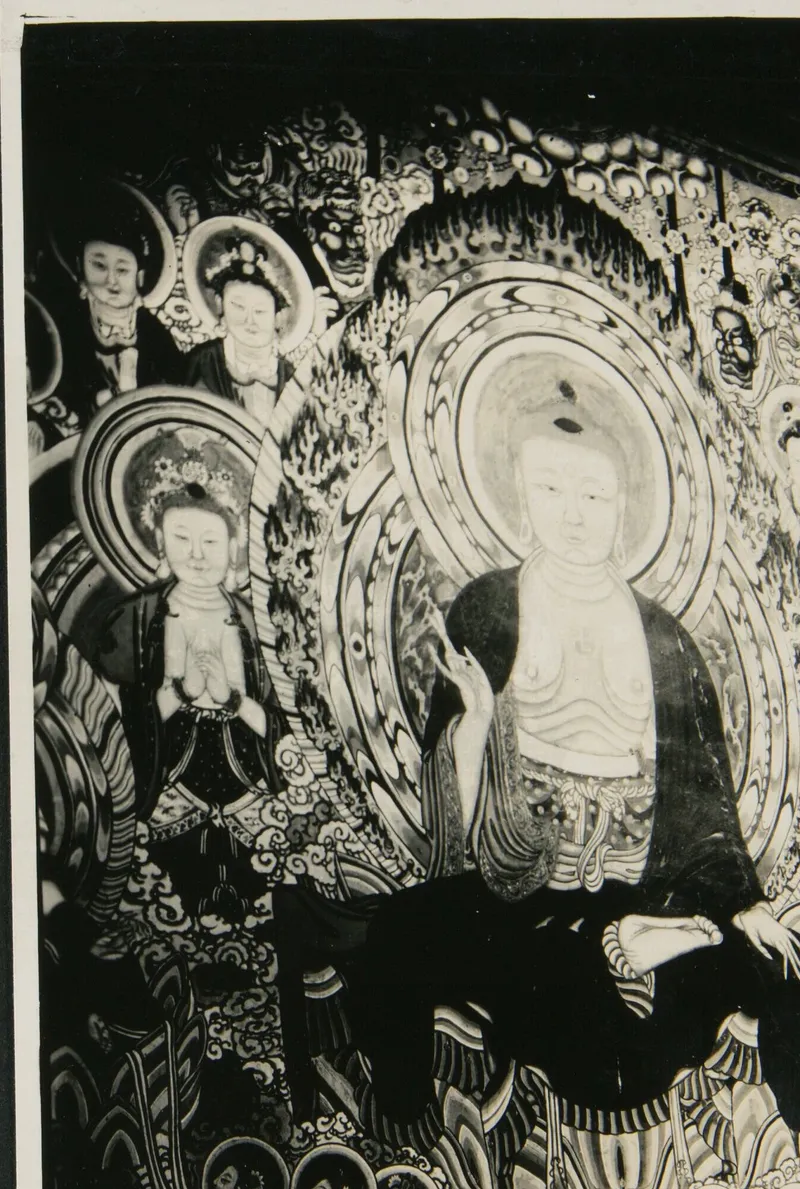
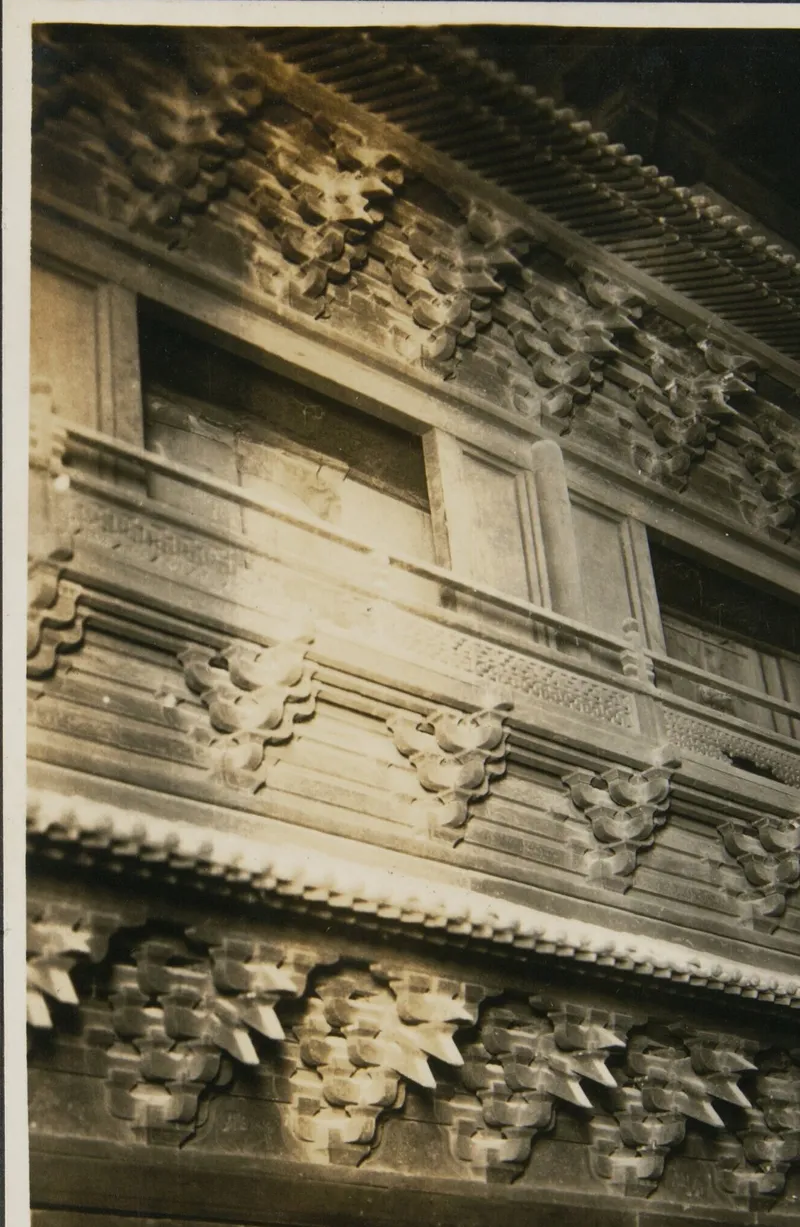
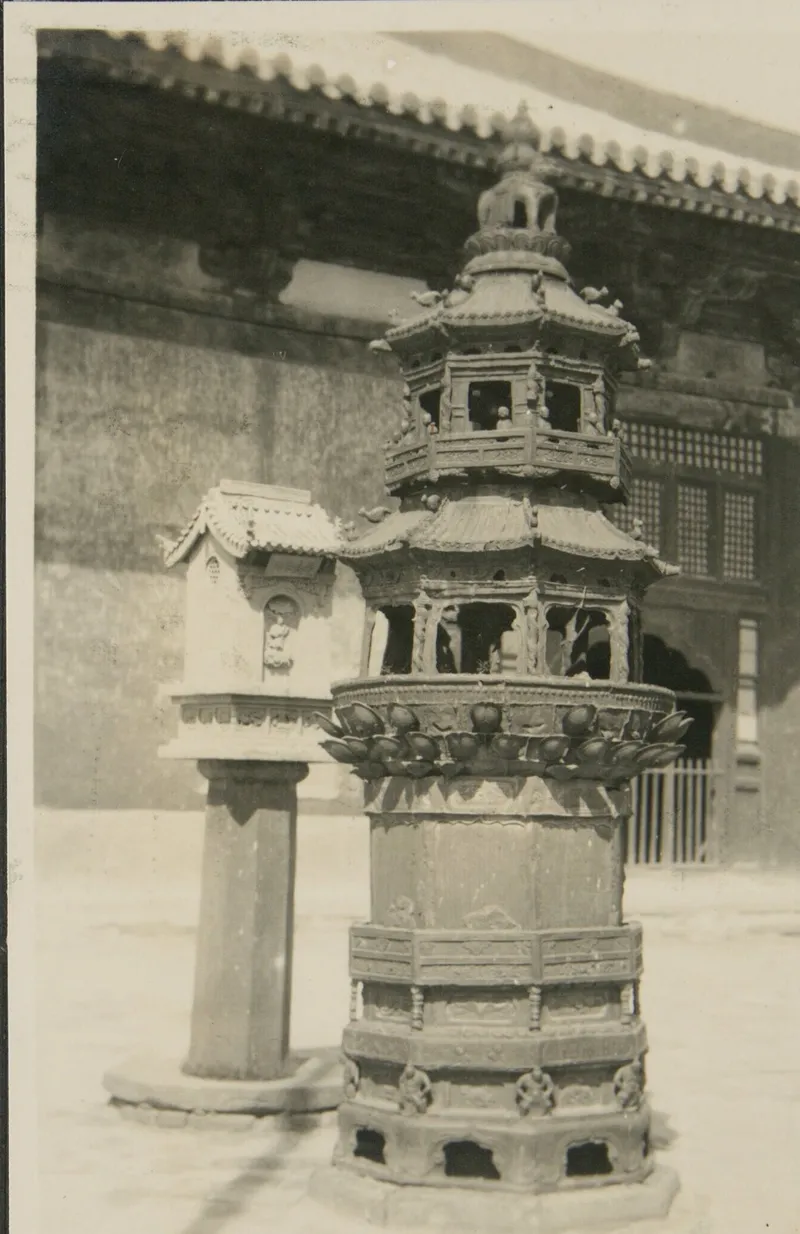
The 171st and 176th installments of the fifteenth volume of Ajia Taikan included historical photographs of the murals of the Upper Huayan Temple and of the wooden framework and an incense burner within the Hall of the Bhagavat Sutra Repository of the Lower Huayan Temple. The fifteenth volume was published between the 13th and 14th years of the Showa era, that is, 1938 to 1939.
Modern Surveys and Conservation Documents
- Liang Sicheng and Liu Dunzhen (eds.): Survey Report on the Ancient Architecture of Datong, vol. 1, Society for Research in Chinese Architecture, 1936. The “Huayan Temple” section is divided into four parts: a brief history, the Hall of the Bhagavat Sutra Repository, the Haihui Hall, and the Mahavira Hall. Public-domain scan on Wikimedia Commons
- Government Administration Council of the Central People’s Government: Directive on the Protection of Ancient Cultural Buildings, 6 July 1950, Zhengwen Dongzi No. 35. The document lists the demolition of the Haihui Hall of the Lower Huayan Temple by the Xiasipo Primary School; the paper “The State’s Protection of Cultural Relics in the Early Years of the People’s Republic of China,” by the Institute of Contemporary China Studies of the Chinese Academy of Social Sciences, quotes that passage in its original wording. Institutional paper PDF