Introduction
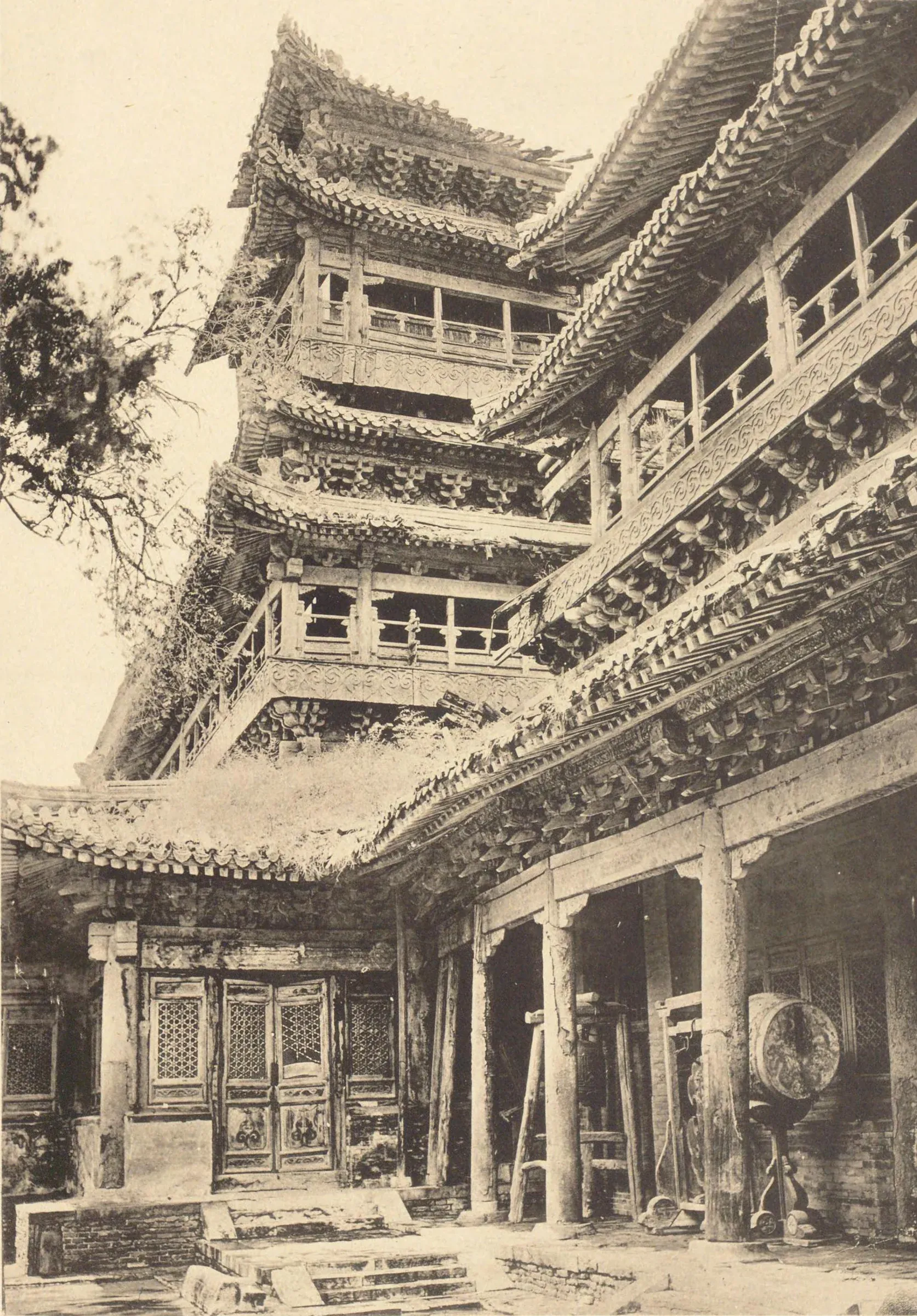
In the sixth year of the Kaihuang era of the Sui (586), the regional inspector of Hengzhou, Wang Xiaoxian, acting on imperial command, exhorted and rewarded ten thousand people of the prefecture to jointly build a temple; the stele erected in the same year is titled the Longzang Temple Stele. The 藏 in the temple’s name is read “zàng,” and “Longzang” (dragon-treasury) in Buddhist vocabulary refers to the Mahāyāna canon or the scripture-treasury of the dragon palace.
In the second year of the Renshou era of the Sui (602), the relics distributed by the court arrived at Hengzhou. The officials of the prefecture surveyed sites throughout the region for placing them, and determined that “only the Longzang Temple under our jurisdiction is fit for raising the stupa.” When the relics were placed within the stupa on the eighth day of the fourth month, the memorial from Hengzhou states that more than a hundred thousand people “all beheld and all received”; from the sky fell “treasure-dust and heavenly flowers” like flakes of gold and silver, and four white cranes circled the stupa before flying away to the southwest.
The timing of the change of plaque from “Longzang” to “Longxing” is not entirely clear. The temple itself followed the account that the name was changed in the Tang. The colophon by Zhu Yizun preserved in the Qing-dynasty Zhengding Xianzhi, however, holds that the name “Longxing” was only adopted after the reconstruction in the first year of the Qiande era of the Song. What is certain is that the catalogue of steles from the first year of Qiande already writes “Longxing Temple.” In the Ming, Du Mu further discovered before the hall of Longxing Temple the Longzang Temple Stele, its base sunk into the earth; after reading the stele he pointed out that Longxing Temple was none other than the Longzang Temple of the Sui.
The change from “Longxing” (龙兴) to “Longxing” (隆兴, written with a different first character) has a definite Qing-dynasty marker. In the forty-ninth year of the Kangxi era (1710), the temple was granted the plaque “Longxing Temple” (隆兴寺); the Zhengding Xianzhi still notes that its “old name was Longxing Temple (龙兴寺), commonly called the Great Buddha Temple.” Thus the Sui stele preserves “Longzang Temple,” the Song and Yuan stele records continue with “Longxing Temple” (龙兴寺), and the Qing-bestowed plaque changed it to “Longxing Temple” (隆兴寺). The three names are not three temples, but the appellations left at one and the same temple site in different ages.
Historical Documents
Quan Sui Wen (Complete Prose of the Sui)
仁寿二年正月二十三日,复分布五十一州,建立灵塔,令总管刺史已下,县尉已上,废常务七日,请僧行道,教化打刹,施钱十文,一如前式。期用四月八日午时,合国化内,同下舍利,封入石函。所感瑞应者,别录如左。
On the twenty-third day of the first month of the second year of the Renshou era, [the court] again distributed [relics] to fifty-one prefectures, establishing numinous stupas, and ordered that all from the commandery governors and regional inspectors down to the county defenders up, set aside their ordinary duties for seven days, invite monks to perform the rites, teach and transform [the people] by striking the temple-mast, and offer ten cash in alms, all according to the former manner. It was set that at the noon hour of the eighth day of the fourth month, throughout the whole realm within [the reach of] the transformation, the relics should together be lowered and sealed within their stone caskets. The auspicious responses that were called forth are recorded separately as follows.
恒州表云:舍利诣州建立灵塔。三月四日到州,即共州府官人巡历检行安置处所,唯治下龙藏寺堪得起塔。其月十日,度地穿基,至十六日未时,有风从南而来,寺内香气,殊异无比,道俗官私,并悉共闻。及有老人,姓金名瓒,患鼻不闻香臭,出二十余年。于时在众亦闻香气,因即鼻差。至四月八日,临向午时,欲下舍利,光景明净,天廓无云,空里即雨宝屑天花,状似金银碎薄大小閒杂,雰雰散下,犹如雪落。先降塔基石函上,遍堕寺内城治,俱有杂色晃曜,金晶映日。时即将衣承取,复在地拾得,道俗大众十万余人,并见俱获。又刹柱东西二处,忽有异气,其色黄白,初细后粗,如蜂火烟。龙形宛转,回屈直上,周旋塔顶,游腾清汉,莫测长短,良久乃灭。又有四白鹤,从东北而来,周绕塔上,西南而去。至二十日巳时,筑塔基恰成,复雨宝屑,天花,收得,盛有一升。即遣行参军王亮,于先奉献。皇帝开花,于宝屑内复得舍利三颗,甚大欢欣。
The memorial from Hengzhou states: The relics were brought to the prefecture to establish a numinous stupa. They arrived at the prefecture on the fourth day of the third month, whereupon [we] together with the prefectural officials made a circuit to inspect and select a site for their placement, and found that only the Longzang Temple under our jurisdiction was fit for raising the stupa. On the tenth day of that month, [we] measured the ground and dug the foundation, and by the wei hour of the sixteenth day a wind came from the south, and within the temple a fragrance arose, extraordinary beyond compare, which clergy and laity, officials and private folk all alike smelled. There was an old man, surname Jin, given name Zan, who had suffered from a nose that could smell neither fragrance nor stench for more than twenty years; at that time, among the crowd, he too smelled the fragrance, and thereupon his nose was healed. When the eighth day of the fourth month came, as it drew toward the noon hour and [we] were about to lower the relics, the light was bright and clear, the sky vast and cloudless, and from the empty air there rained treasure-dust and heavenly flowers, shaped like flakes of gold and silver, large and small intermingled, scattering down in profusion like falling snow. They first descended upon the stone casket of the stupa foundation, then fell all about the temple and the walled town, all glittering with various colors, their golden brilliance reflecting the sun. At the time [people] caught them with their garments and also picked them up from the ground; the great multitude of clergy and laity, more than a hundred thousand people, all beheld and all obtained them. Moreover, at the two places east and west of the temple-mast, a strange vapor suddenly appeared, yellow-white in color, at first fine and later coarse, like the smoke of a bee-swarm or of fire. In the form of a dragon it wound and twisted, curling and rising straight up, circling the stupa’s summit, roaming and soaring in the clear Milky Way, its length beyond measure, and only after a long while did it vanish. There were also four white cranes that came from the northeast, circled about the stupa, and departed to the southwest. By the si hour of the twentieth day, when the stupa foundation had just been completed, treasure-dust and heavenly flowers rained down again, and what was gathered filled up one sheng. [We] then dispatched the acting adjutant Wang Liang to present them beforehand. When the Emperor opened the flowers, within the treasure-dust he again obtained three relics, and was greatly delighted.
Sui Longzang Temple Stele
右齐开府长兼行参军九门张公礼撰,不著书人名氏。字画遒劲,有欧、虞之体。隋开皇六年建,在今镇州。碑云:“太师、上柱国、大威公之世子,左威卫将军、上开府仪同三司、使持节恒州诸军事、恒州剌史、鄂国公、金城王孝仙,奉敕劝奖州人一万共造此寺。”其述孝仙云:“世业重于金、张,器识逾于许、郭。”然北齐、周、隋诸史,不见其父子名氏,不详何人也。
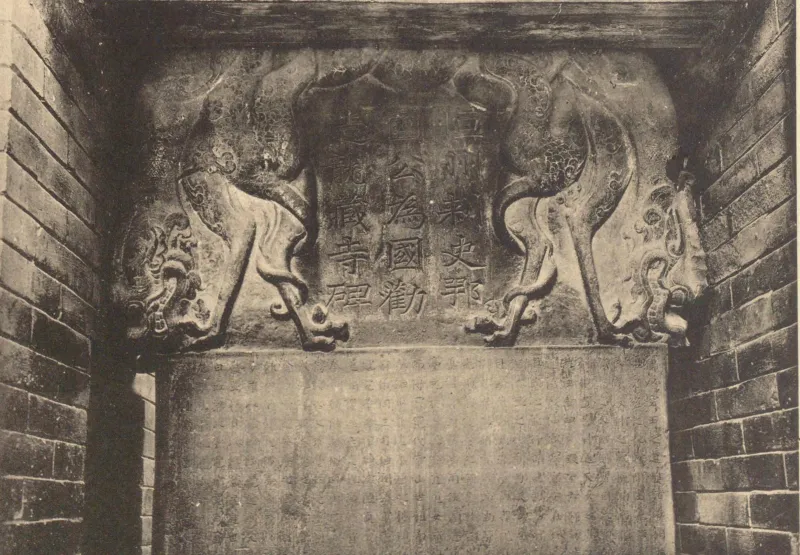
The above [stele] was composed by Zhang Gongli of Jiumen, kaifu, senior concurrent acting adjutant of [Northern] Qi, and does not record the name of the calligrapher. The brushwork is vigorous and firm, having the manner of Ouyang [Xun] and Yu [Shinan]. It was erected in the sixth year of the Kaihuang era of the Sui, in present-day Zhenzhou. The stele says: “The heir of the Grand Preceptor, Supreme Pillar of State, and Duke of Great Might—the general of the Left Awe-inspiring Guard, kaifu yitong sansi of the upper rank, commissioner with authority over all military affairs of Hengzhou, regional inspector of Hengzhou, Duke of E, and King of Jincheng, Xiaoxian—acting on imperial command, exhorted and rewarded ten thousand people of the prefecture to jointly build this temple.” In describing Xiaoxian it says: “His family’s hereditary calling weighed heavier than that of the Jin and Zhang [clans]; his capacity and discernment surpassed those of Xu and Guo.” Yet in the various histories of the Northern Qi, Zhou, and Sui, the names of this father and son do not appear, and it is not known who they were.
右隋龙藏寺碑,齐张公礼撰。龙藏寺已废,此碑今在常山府署之门,书字颇佳,第不见其人姓名尔。碑以隋开皇六年立,后题张公礼,犹称齐。按周武帝建德六年,虏齐幼主高常,齐遂灭。后四年,隋建开皇之号,至六年齐灭,盖十年矣。公礼尚称齐官,何也?嘉祐八年九月廿九日书。
The above Sui Longzang Temple Stele was composed by Zhang Gongli of [Northern] Qi. The Longzang Temple has already fallen into ruin, and this stele is now at the gate of the prefectural office of Changshan; its calligraphy is quite fine, only the name of the writer is not to be seen. The stele was erected in the sixth year of the Kaihuang era of the Sui, yet in the signature at the end Zhang Gongli still styles himself [an official of] Qi. Now, in the sixth year of the Jiande era of Emperor Wu of Zhou, [the Zhou] captured the young ruler of Qi, Gao Chang, and Qi was thereupon extinguished. Four years later, the Sui established the Kaihuang reign-title, and by its sixth year Qi had been extinct for about ten years. Why then did Gongli still style himself an official of Qi? Written on the twenty-ninth day of the ninth month of the eighth year of the Jiayou era.
Jingji Jinshi Kao (A Study of Stone and Bronze Inscriptions of the Capital Region)
隋龙藏寺碑并阴,张公礼撰正书,开皇六年十二月立。
The Sui Longzang Temple Stele, together with the reverse face, composed and written in standard script by Zhang Gongli, erected in the twelfth month of the sixth year of the Kaihuang era.
宋龙兴寺铸众修阁记碑,僧惠演撰,正书,乾德元年立。
The Song stele, the “Record of the Casting by the Congregation and the Repair of the Pavilion at Longxing Temple,” composed by the monk Huiyan, in standard script, erected in the first year of the Qiande era.
宋龙兴寺铸大悲像并阁碑,田锡撰,吴郢行书,端拱二年立。
The Song stele, “On the Casting of the Great Compassion Image and the Pavilion at Longxing Temple,” composed by Tian Xi, in running script by Wu Ying, erected in the second year of the Duangong era.
宋龙兴寺大悲阁记,葛繁撰正书。绍圣四年立。
The Song “Record of the Pavilion of Great Compassion at Longxing Temple,” composed and written in standard script by Ge Fan, erected in the fourth year of the Shaosheng era.
元敕赐龙兴寺帝师碑,赵孟𫖯撰并行书,延祐三年立。
The Yuan “Stele of the Imperial Preceptor at the Longxing Temple Bestowed by Imperial Command,” composed and written in running script by Zhao Mengfu, erected in the third year of the Yanyou era.
元祝延圣主本命长生碑,王思廉撰,赵孟𫖯正书,延祐四年立。元长命灯记,僧承恩行书,延祐元年立。
The Yuan “Stele Praying for the Longevity of the Holy Sovereign at His Birth-fate,” composed by Wang Silian and written in standard script by Zhao Mengfu, erected in the fourth year of the Yanyou era. The Yuan “Record of the Longevity Lamp,” in running script by the monk Cheng’en, erected in the first year of the Yanyou era.
Zhengding Xianzhi (Zhengding County Gazetteer)
工人冶者与夫力役之辈,皆妙选能者,凡所经费,悉从官给。像成,其身七十三尺,其臂四十有二,威容烜赫,相好圆成,善者见之而心开,不善者瞻之而生敬。有生之类,迁善远罪于冥冥不可见之间,其为利也,岂小补哉!
The artisans and metal-casters and the laborers were all choicely selected from among the skilled, and all the expenses were entirely provided by the government. When the image was completed, its body was seventy-three chi and its arms numbered forty-two; its awe-inspiring countenance was resplendent, its auspicious marks perfectly complete—the good, beholding it, opened their hearts, and the wicked, gazing upon it, gave rise to reverence. Living beings turned toward the good and drew away from wrongdoing in the dim and unseeable realm; the benefit of it—how could it be but a small help!
Jinxie Linlang
右隋龙藏寺碑,齐张公礼撰,而不著书人名字。集古录谓寺已废,碑在常山府署之门。常山即今之真定。予近以使事过之,闻府治东二里龙兴寺有古铜佛一躯,崇七十二尺,阁之覆者崇百有三十尺。与太守同年李君往游其间,见殿前一古碑,其趺已没土中,读之,乃公𢢪文。盖寺在隋名龙藏,欧公谓寺废,寺碑在常山府署,盖未尝亲历其地,故误书耳。
The above Sui Longzang Temple Stele was composed by Zhang Gongli of [Northern] Qi, but does not record the name of the calligrapher. The Jigu Lu states that the temple has fallen into ruin and the stele stands at the gate of the prefectural office of Changshan. Changshan is present-day Zhending. I recently passed through it on official business, and heard that at the Longxing Temple two li east of the prefectural seat there is an ancient bronze Buddha, seventy-two chi tall, and the pavilion that covers it is one hundred thirty chi tall. Together with the prefect Li, my examination-year companion, I went to visit within it, and saw before the hall an ancient stele, its base already sunk into the earth; reading it, [I found] it was Gongli’s composition. In fact the temple was named Longzang in the Sui; Lord Ouyang said the temple had fallen into ruin and the temple stele stood at the prefectural office of Changshan—doubtless he had never personally been to the place, and so recorded it in error.
Jifu Tongzhi (Comprehensive Gazetteer of the Metropolitan Region)
隆兴寺,在府治东,一名“龙兴寺”,又名“大佛寺”。隋开皇六年建,初为龙藏寺,创建之日,天降异香,恒山刺史鄂国公王孝仙有碑记。大殿内有张公礼龙藏寺碑。宋开宝四年于寺北重建。后有大悲阁,内铸铜佛像,高与阁等。宋太祖曾幸之,绘像于阁西。元大德五年重修,有赵孟𫖯圣主本命长生碑。明万历四年修大悲阁。
Longxing Temple (隆兴寺) stands east of the prefectural seat; it is also called “Longxing Temple” (龙兴寺) and again “Great Buddha Temple.” It was built in the sixth year of the Kaihuang era of the Sui, being at first the Longzang Temple; on the day of its founding, a strange fragrance descended from Heaven, and the regional inspector of Hengshan, Duke of E Wang Xiaoxian, made a stele record of it. Within the great hall is Zhang Gongli’s Longzang Temple Stele. In the fourth year of the Kaibao era of the Song it was rebuilt to the north of the temple. Behind it is the Pavilion of Great Compassion, within which a bronze Buddha image was cast, as tall as the pavilion. Emperor Taizu of the Song once favored it with a visit, and had his image painted to the west of the pavilion. In the fifth year of the Dade era of the Yuan it was rebuilt, and there is Zhao Mengfu’s “Stele of the Holy Sovereign’s Birth-fate Longevity.” In the fourth year of the Wanli era of the Ming the Pavilion of Great Compassion was repaired.
Huangchao Tongzhi (Comprehensive Records of the Imperial Dynasty)
御制隆兴寺碑,御制三箭山诗。御制隆兴寺礼大佛诗书。
The imperially composed Longxing Temple Stele; the imperially composed poem on Mount Sanjian; the imperially composed poem and calligraphy on paying reverence to the Great Buddha at Longxing Temple.
御制登广惠寺多宝塔诗,御制重修隆兴寺大佛记。以上正定府。
The imperially composed poem on ascending the Prabhūtaratna Pagoda at Guanghui Temple; the imperially composed “Record of the Rebuilding of the Great Buddha at Longxing Temple.” The above are of Zhengding Prefecture.
Historical Photographs
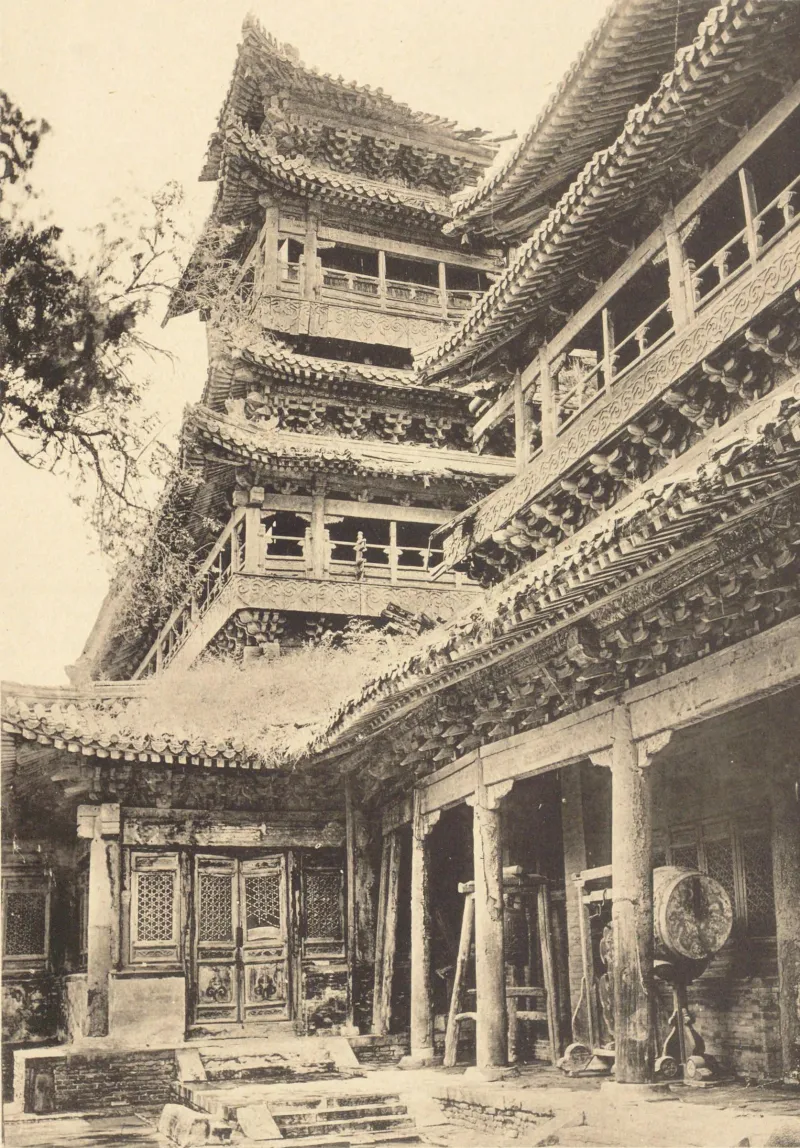
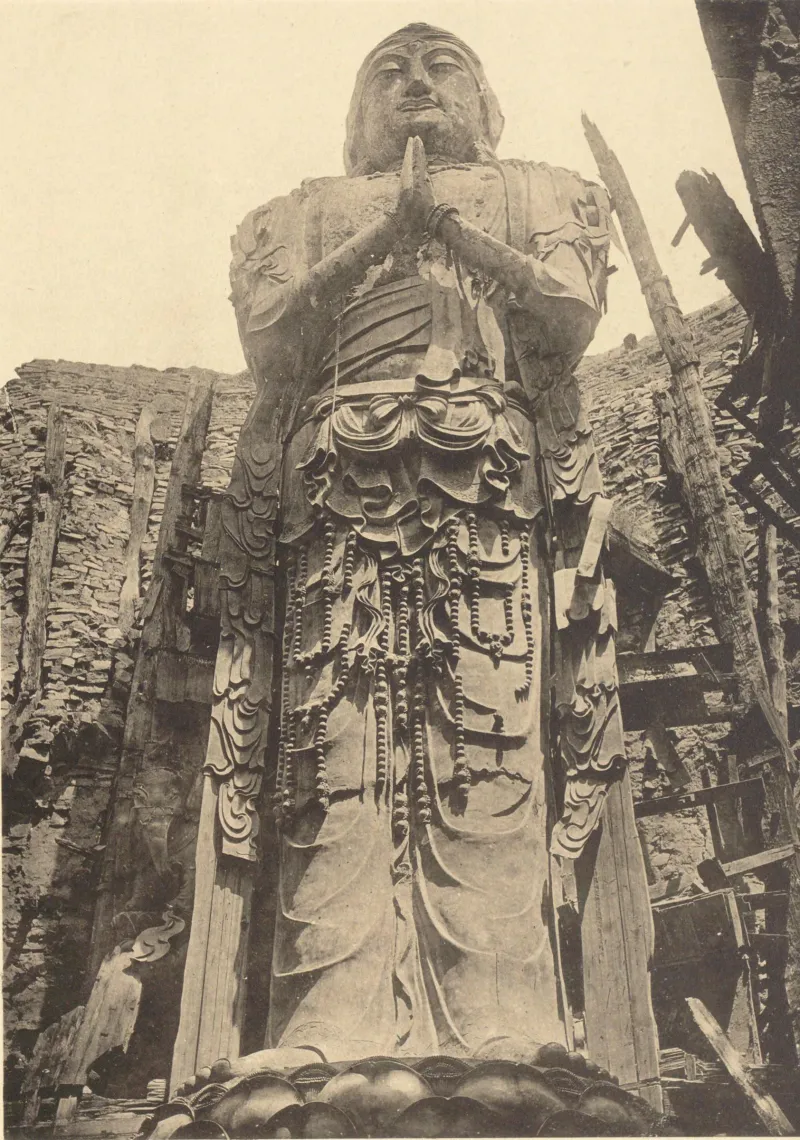
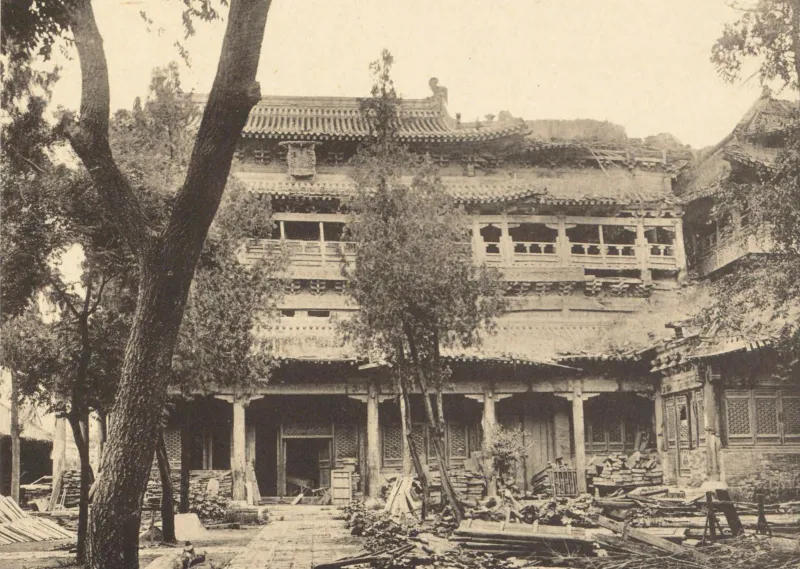
1920s–1930s
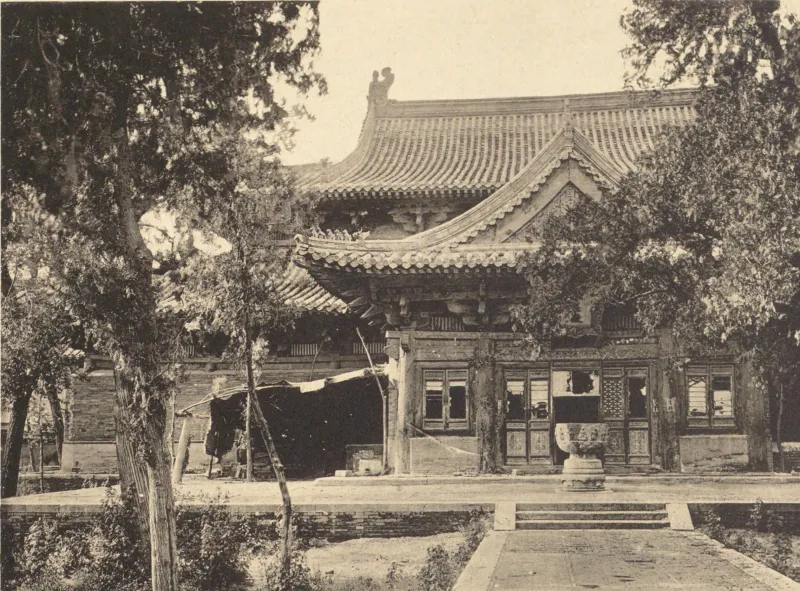
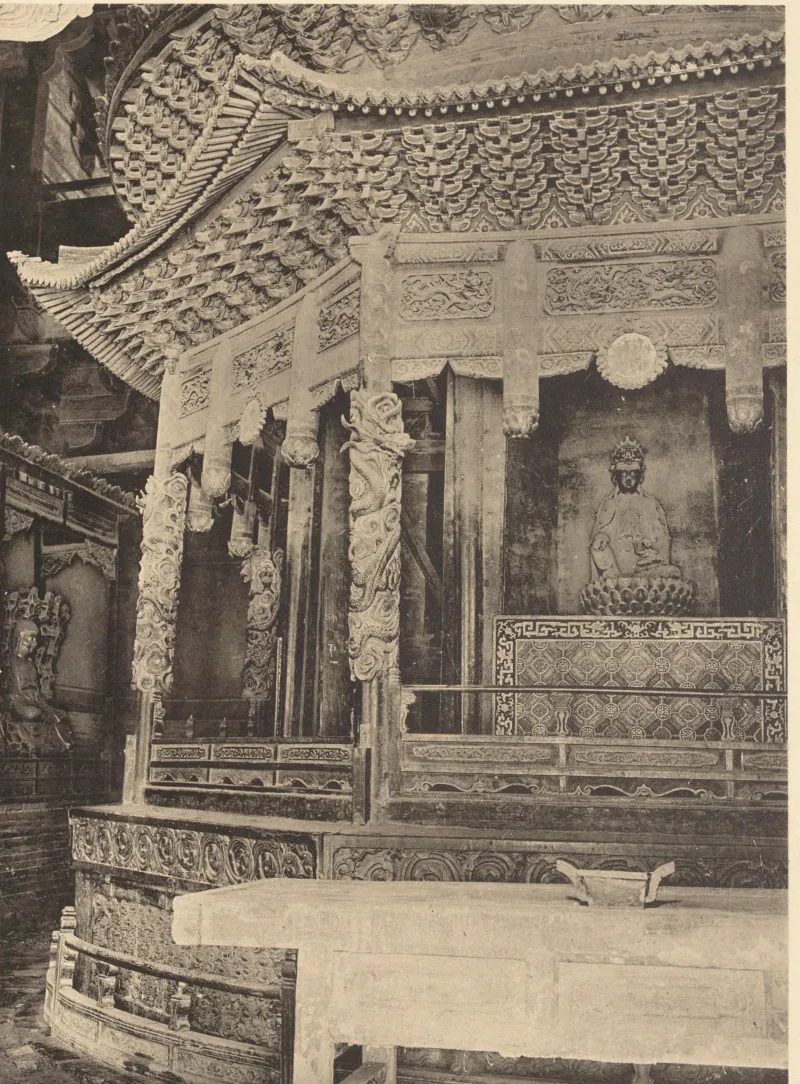
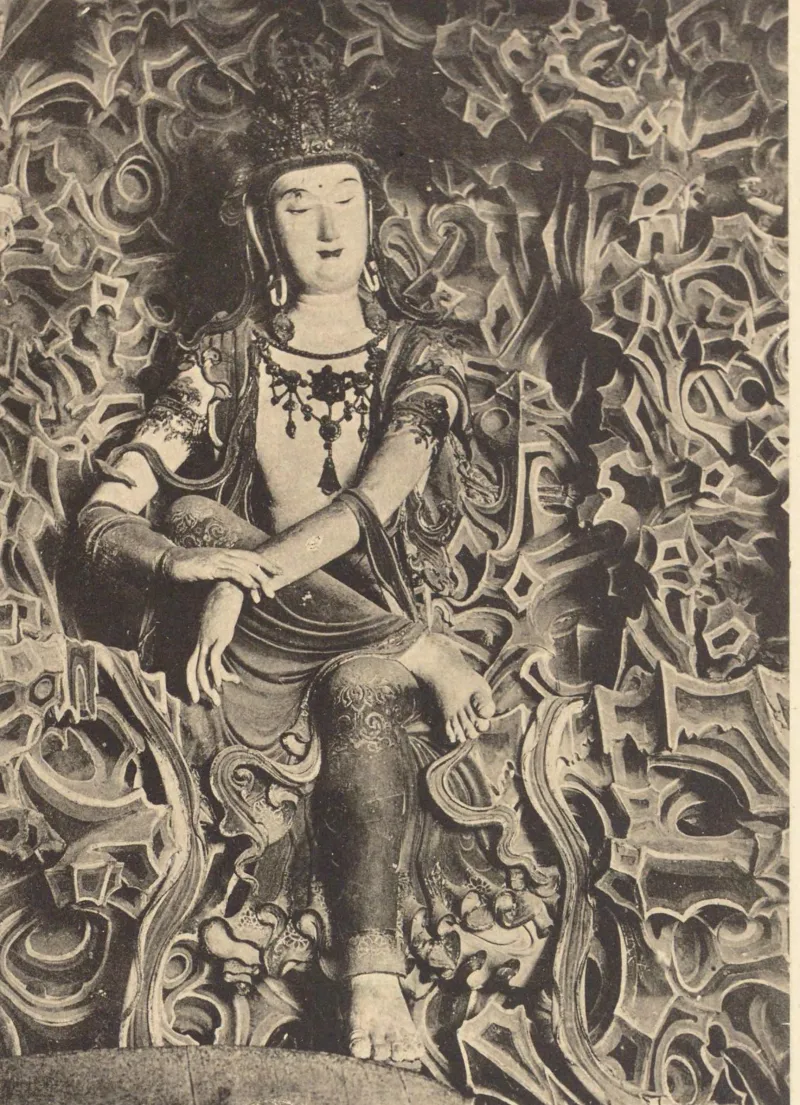
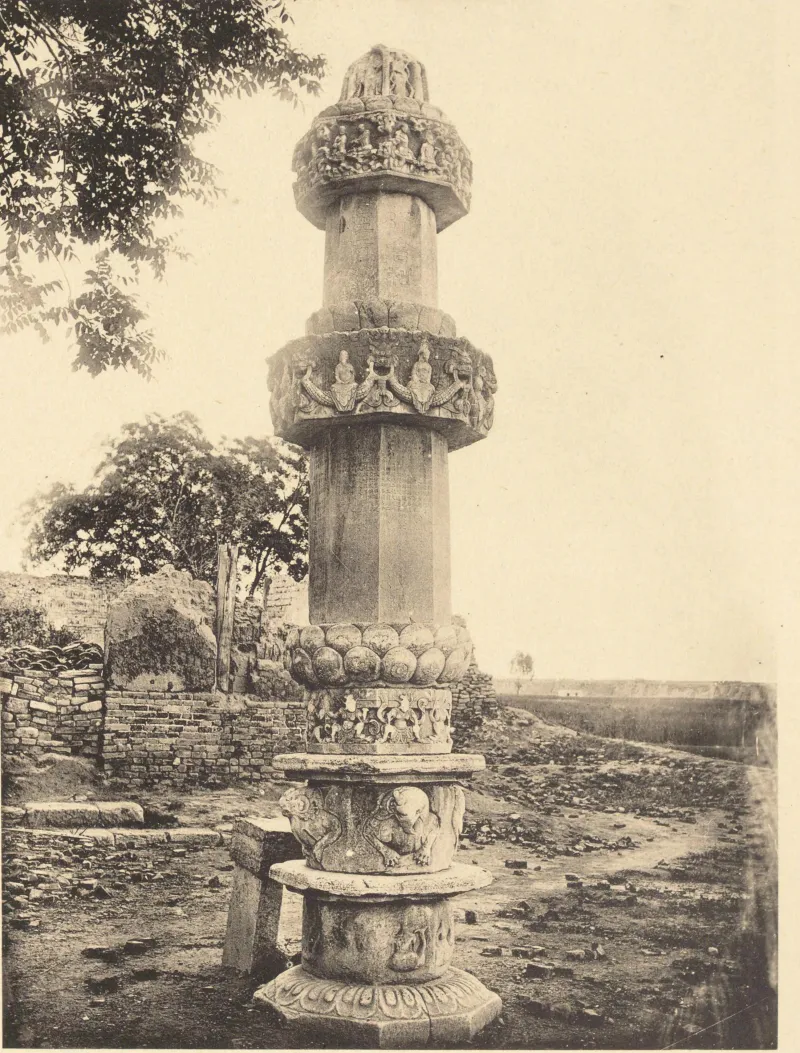
Tokiwa Daijō and Sekino Tadashi’s Historical and Cultural Sites of China (Chūgoku Bunka Shiseki), volume 8, includes old views of the great hall, the Great Compassion Guanyin, the Jiqing Pavilion, the revolving repository (zhuanlunzang), the Guanyin on the rear wall of the Moni Hall, the Longzang Temple Stele, and the Uṣṇīṣa Vijayā Dhāraṇī pillar east of the temple at Longxing Temple in Zhengding.
1933
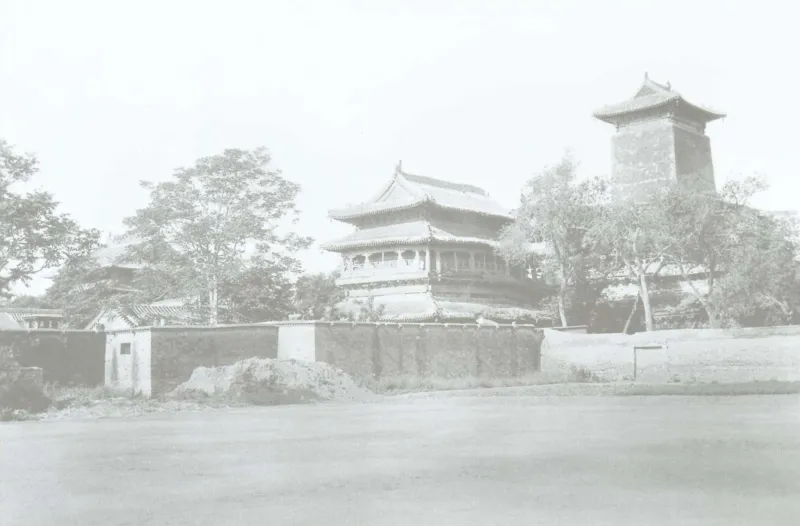
Liang Sicheng went to Zhengding to conduct surveys twice, in April and November of 1933; volume 1 of Illustrated Dictionary of Chinese Ancient Architecture, edited by Lin Zhu, includes the northern exterior of Longxing Temple as seen in the survey.